

Kate here. This is the first issue of the Quarterly, our roundup that we'll be publishing once per quarter to tell you what we're watching across our B2B tech clients, where the market's moving, and how we're responding to it at Zmist & Copy.
If you want to get updates from us more often, subscribe to our monthly newsletter, The Tilt.
Here's what caught our attention this quarter:
- Where the tech market's heading
- The positioning move separating brands that get cited from ones that don't
- What AI did to content teams (we asked 53 teams and they told us)
- The one channel everyone's investing in (and whether it's worth it)
- One SEO task you're probably paying for that you shouldn't be
- Why AI visibility belongs in your performance report (and what ours look like)
- LinkedIn works, but ghostwritten LinkedIn mostly doesn't
Let's talk about this.
1. Tech's hottest business model is the one service firms have run all along
It has an awkward name "services as software." For years it worked in the opposite direction, meaning services became software. AI just reversed it. The most interesting B2B tech companies now do the work, instead of offering you a tool so you can do it yourself.
According to Sequoia Capital, for every dollar a company spends on software, it spends about six dollars on services. The moment AI can do a job, the addressable market becomes the labor budget, which is many times larger than the software budget.
For SaaS, the tool becomes invisible (it runs in the background, customers only care about the work done), the outcome is all that matters. For service firms, the order-taker era is ending. "Tell us what to build" is becoming "own the result."

Owning the outcome comes with a catch. Read more here.
2. The positioning move most companies are too scared to make (but it's totally worth it)
The move is to narrow down.
Companies stay broad because it feels safe. But this is how they become irrelevant to everyone.
The clients getting traction fastest are the ones who niched down - by industry, use case, or persona - and stopped being for everyone, everywhere. Eleken is the case we keep pointing to: a design agency that could serve anyone, and chose not to. Read the case study.
Why does it matter now even more than before? SEO answered "where do I rank?" AEO answers "who am I best for?" AI can't cite you if it can't place you. A broad offer targeting every keyword leaves you uncategorizable.
Narrow and specific positioning is the precondition for being cited at all.
3. 85% of companies made more content with AI. Half of them got nothing from it.
We ran a study this year with 53 B2B tech content teams on what AI changed for them.
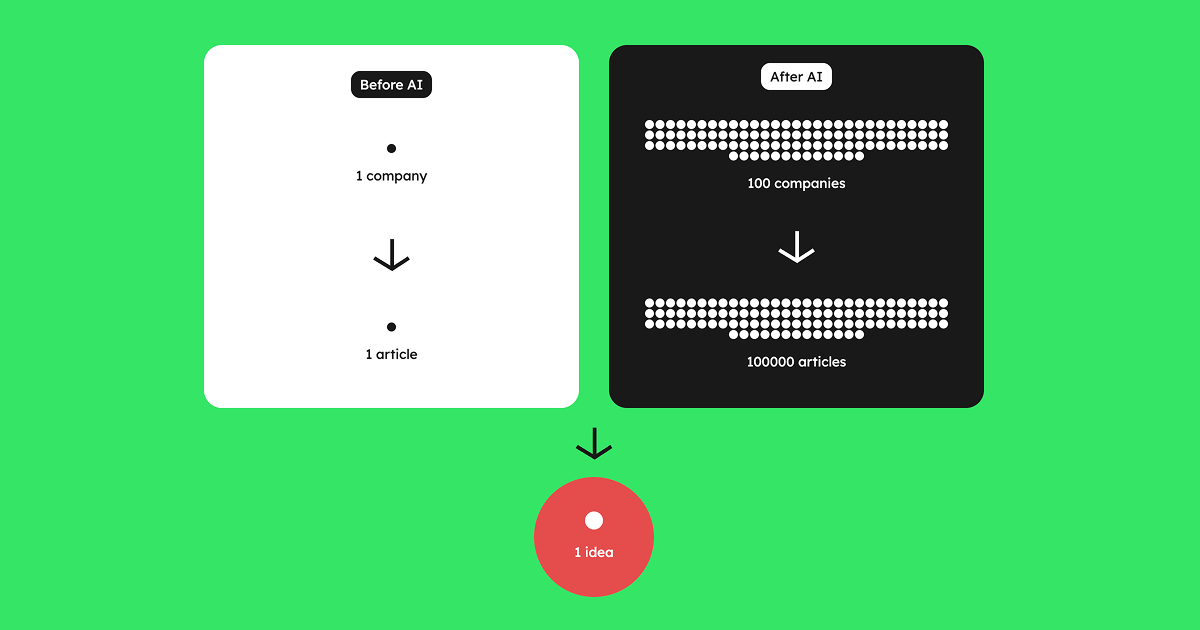
The short version: 85% publish more than they did a year ago. But among the teams that scaled output the most, nearly half saw no change in results.
The teams that are getting results from content don't publish much, they are more focused on writing things worth publishing. The market has already moved past the "AI makes content free, so let's produce more" phase. 52% of the teams we surveyed plan to publish less next year, not more.
Full report, free and ungated → https://www.zmistandcopy.com/report
OUR TAKE
Instead of asking themselves, "How do we publish more?" companies that get results from content ask, "What's worth saying?"
We started calling them Content Thinkers. The opposite crowd is Content Producers.
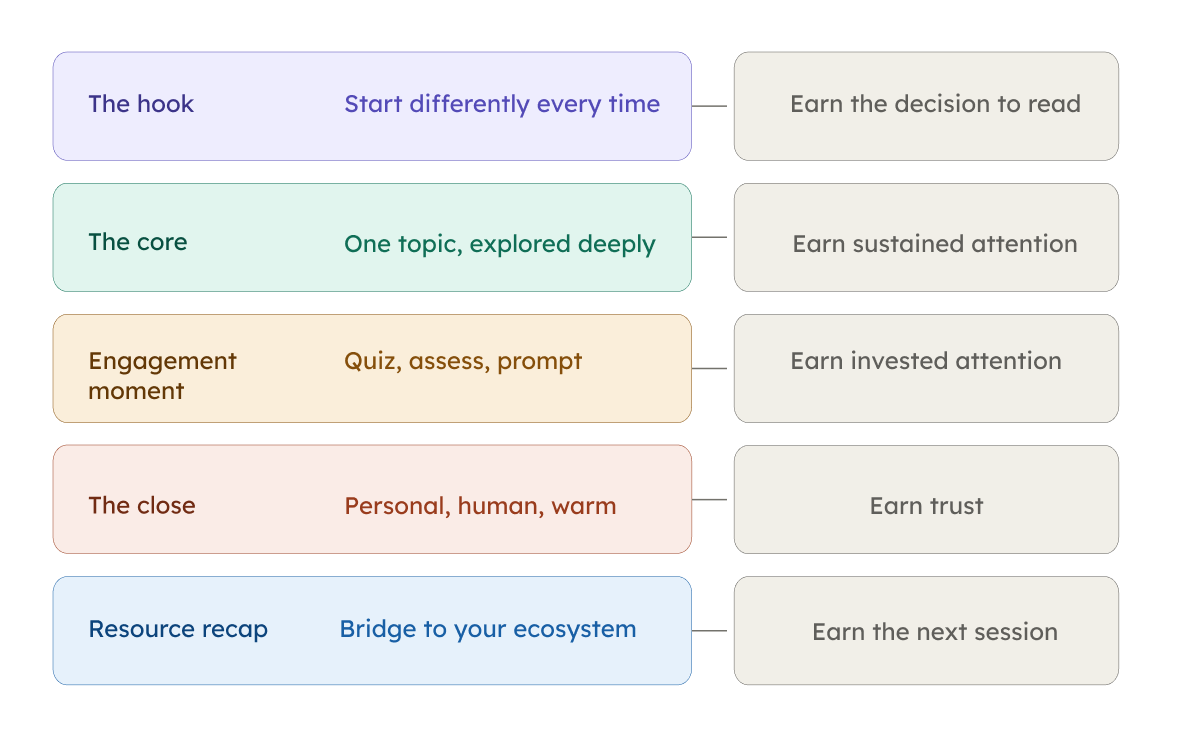
Here's the difference between them:
Which camp is your team in? Take this quiz to find out.
4. Let us guess: you're thinking about launching a newsletter
Everyone wants one. It's one of the few channels where you own the relationship instead of betting it on an algorithm. Your audience doesn't disappear when Google rolls out an update or AI stops rewarding the latest "best practice" for visibility, like adding an llm.txt file.
The catch: most B2B newsletters never get opened. The channel only pays off if people actually want to open it.
We got one client's newsletter to a 66% open rate, and it now drives 22% of their site traffic. Here's how we write newsletters people open.
5. One SEO task you're probably still paying someone to do by hand
Selecting target keywords for every piece of content used to be a job. Someone sat in Ahrefs, checked volumes, sorted by intent, decided what goes where.
Now it's an API call. If you're already paying for Ahrefs, the keyword-selection part can run programmatically. Keywords, volume, difficulty, and intent can be pulled straight into your workflow without requiring you to log in.
To be clear, this isn't an argument against SEO people. But why pay someone to do the part a script does better? The hard calls, such as technical audits, backlink strategy, deciding what's worth ranking for in a market that keeps moving, still need someone who knows what they're looking at.
6. AI visibility belongs in your performance report
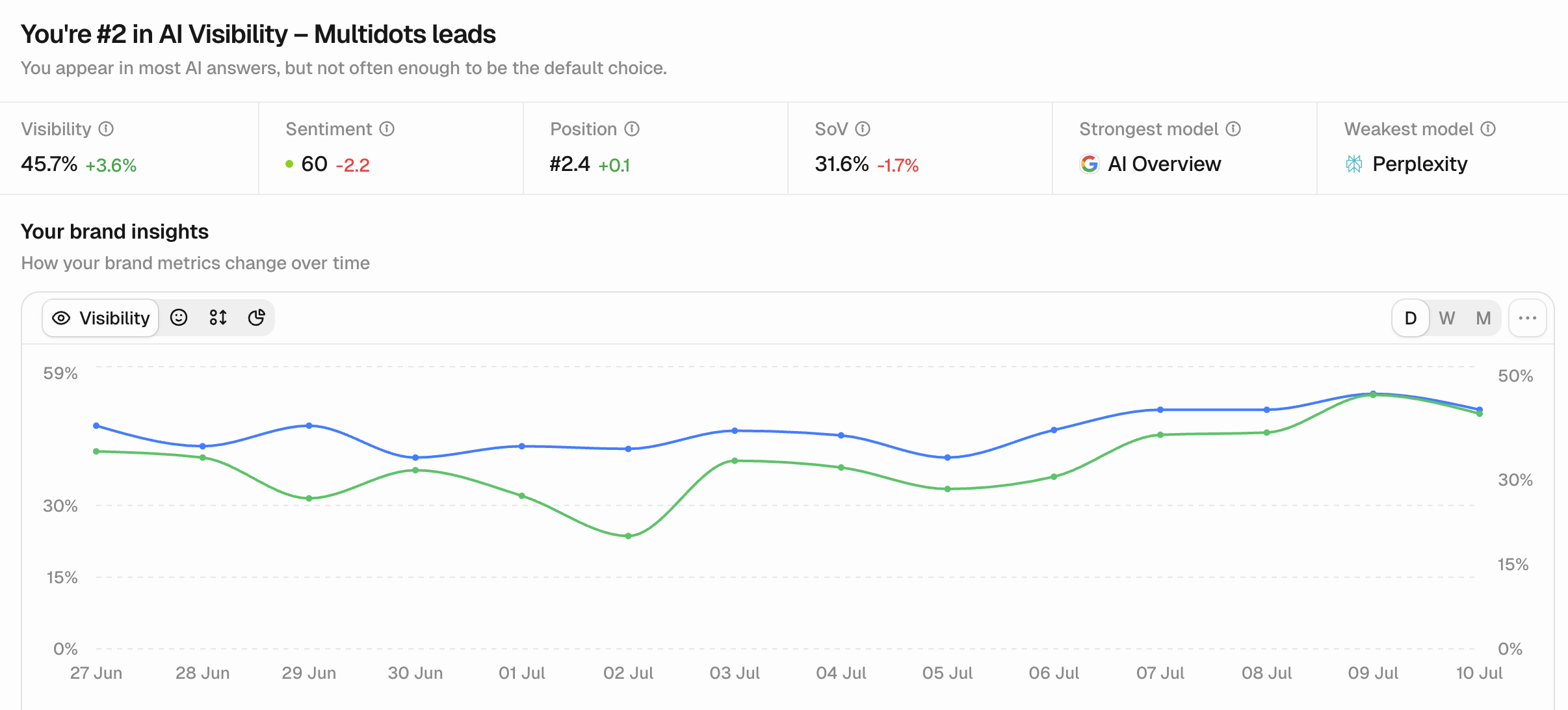
Most performance reports still stop at rankings and traffic. But when someone asks ChatGPT or Perplexity about your category, do you come up?
Your AI visibility score is interesting to watch, but it's the least useful part. The value is which pages to prioritize, where a few backlinks would close a gap, which competitors keep getting cited instead of you. AI visibility tools help you make an informed decision about what to do next.
We build monthly performance reports for clients that give them the answer to this question.
7. LinkedIn works… if you stop treating it like an outsourced task
LinkedIn impacts AI visibility and brand awareness, so it's worth taking seriously.
Every CEO wants to outsource LinkedIn to a ghostwriter, but they rarely succeed. A ghostwriter isn't you, even if they have done a good job at voice calibration. They don't have your opinion.
And posting was never the whole job anyway. The accounts that grow are the ones showing up in other people's comments, engaging like a person with other people. This isn't something you can outsource.
So what do you do? Sit on Linkedin for hours when you have a ton of more important things to do? Not necessarily. You can make LinkedIn a team sport.
We ran an experiment at Zmist & Copy where we got everyone posting on Linkedin for 90 days, competing for impressions. Most of my team had never posted before. With small follower counts and small networks, they basically started from zero. Here's what 5 people with no LinkedIn presence achieved in 91 days (myself excluded):
- 237,658 impressions
- 95,203 unique people reached
- 3,178 new followers
- 4,537 engagements
If you want to know what worked best for us, check out our key findings.
That's the quarter.
If something here is relevant for you right now, get in touch, so we can discuss what we'd do about it first.
See you next quarter.


