


In the first episode of Mad Men, Lucky Strike wants to make an ad, but the problem is they can’t promise health benefits (something tobacco companies have been doing for years). New research has linked cigarettes to cancer, and the US government won't let tobacco companies portray smoking as healthy.
"It's toasted,” says Don Draper. This is how Lucky Strike gets a message of its own.
AI has changed the market the way ecommerce did twenty years ago. Back then, if you sold something, you had to be online, because that's where buyers went. Today, if you sell software, you have to have AI, because that's what buyers expect. AI tools, or tools with AI features, made up 59% of the purchases B2B tech buyers made in the past year.
So everyone is racing to put AI in the tagline. And just like the cigarette companies, everyone ends up saying the same thing. When every competitor leads with AI, AI stops being a reason to choose you.
In this article, I’ll break down the four most common ways B2B tech companies are positioning for AI and how to find your own "it's toasted."
Do you give your AI agent a name?
Meet Fin. Meet Devin. Meet Aidan, your newest employee. Meet Ava, Julian, Alice, Otto, and Kai. AI-native companies are giving their software a human name, offering you to "hire” it as if they were hiring a new employee.
Fin calls itself the highest-performing customer agent on the market and gives you “22 reasons to hire Fin.” Devin is “your team’s autonomous software engineer.” Sable’s Aidan is “your newest employee.” Artisan’s Ava is an AI BDR that runs alongside your team. 11x’s Julian and Alice are digital workers for phone and outbound sales. And then there’s Kai, your AI executive assistant. Some of these companies are even creating photorealistic human avatars to make their AI agents look more attractive.
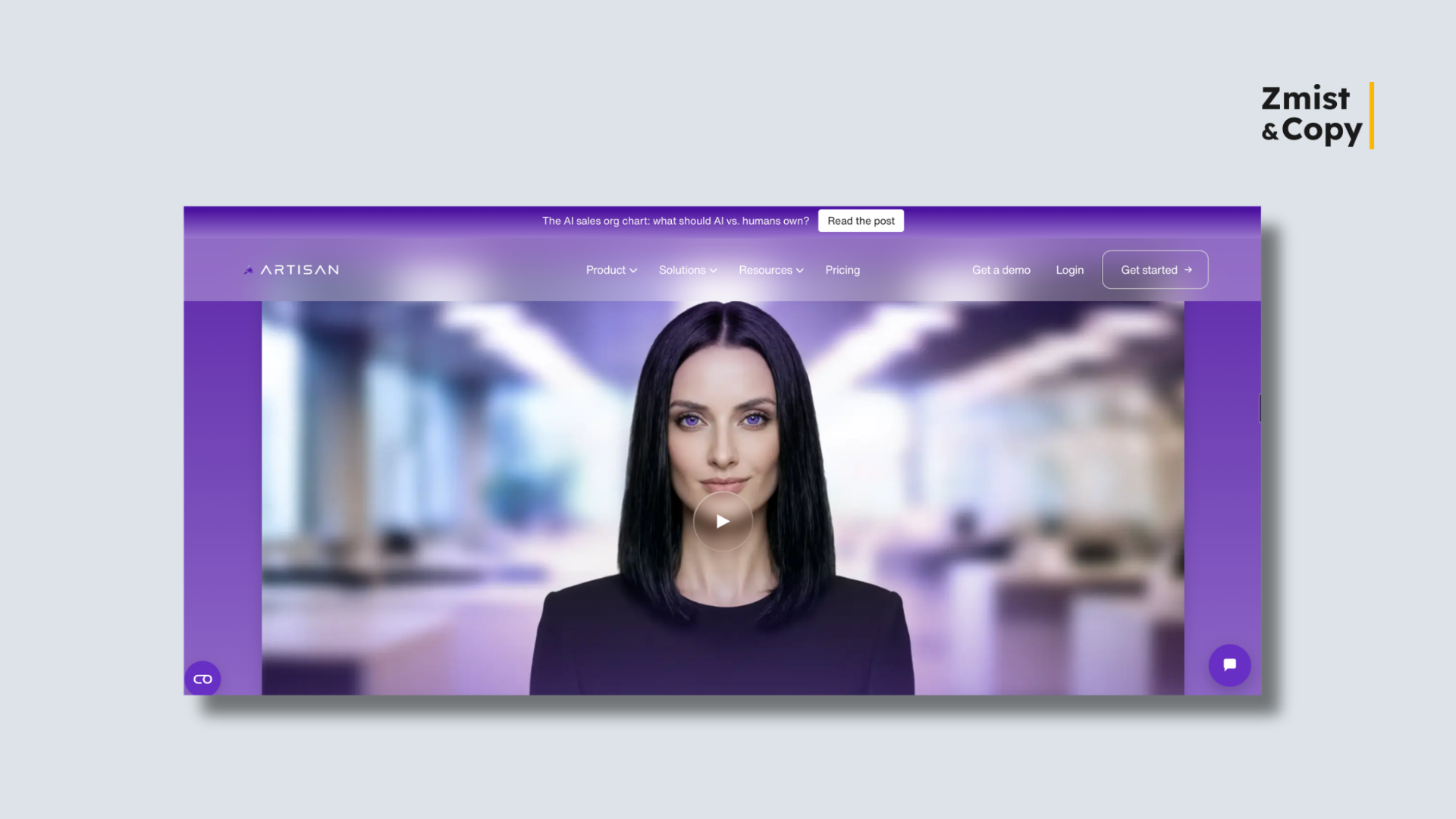
Giving human names to AI agents makes sense. An AI agent does do the work of a person, so giving it a name makes the abstraction easier to understand. But it also creates a slightly uncanny situation.
We are naming software when it is increasingly being sold as a replacement for human labor.
AI is already taking people's jobs, and even if people are mostly okay with it, it's still kind of dystopian.
That said, I don't think naming your agent is a bad idea.
In one of my previous articles about services as software, I argued that these products are competing against a labor line. You're not just asking someone to buy another piece of software. You're asking companies to consider whether software can produce an outcome that they currently pay a person to produce.
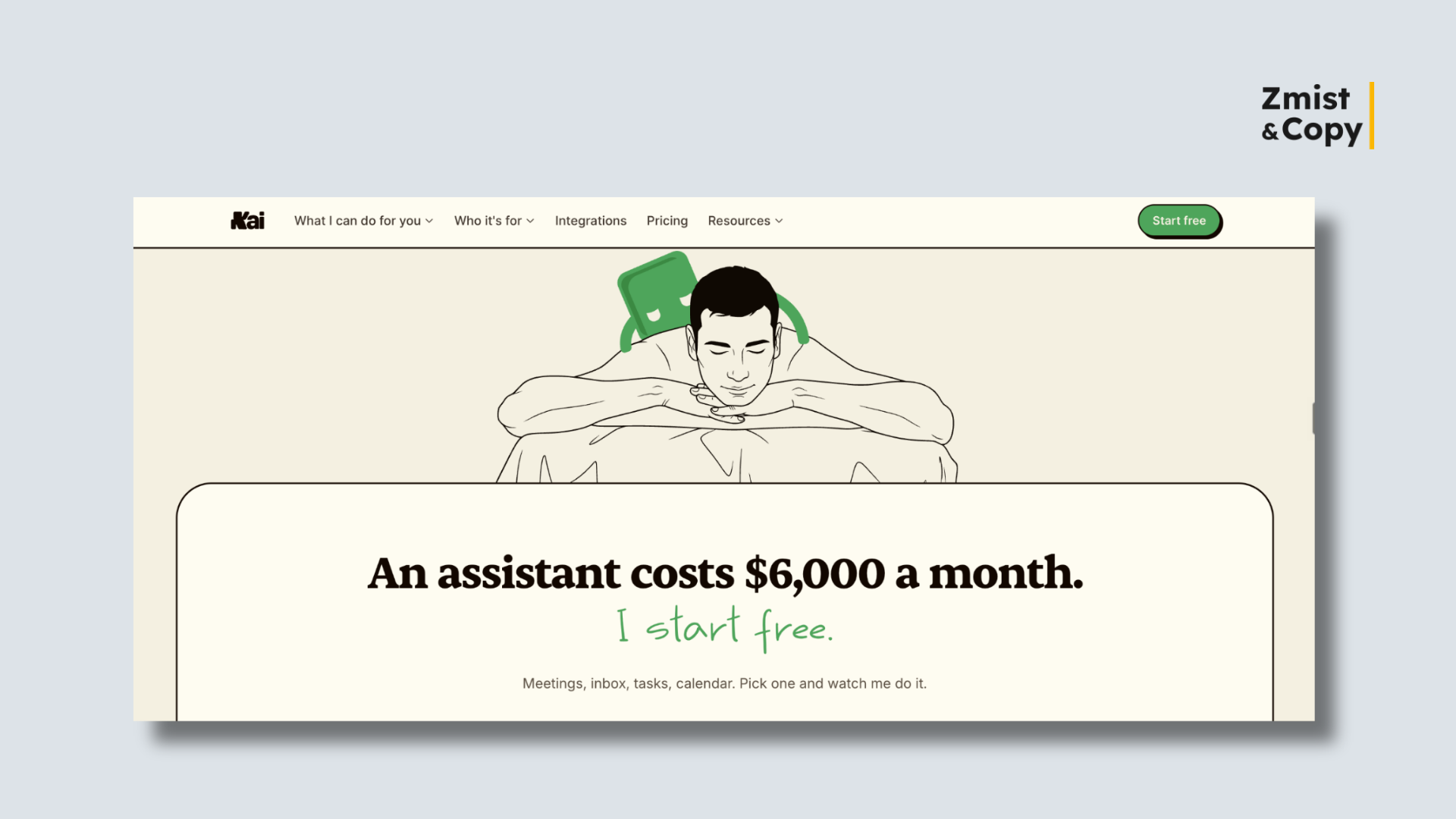
A name alone, however, can't carry your positioning.
According to the TrustRadius 2026 B2B Buying Disconnect Report, buyers say they measure the success of AI primarily through time saved (70%) and higher-quality output (49%), while only 20% say reduced headcount is a success metric. In other words, buyers aren't necessarily thinking: Can this replace Matteo? They're more likely thinking: Can this get the work done faster? And will the output be better?
That's an important distinction for your messaging. Fin is a good example. It claims to be the highest-performing customer agent on the market, then spends the rest of the page proving the claim with resolution rates, customer numbers, model performance, integrations, testing, and other evidence.
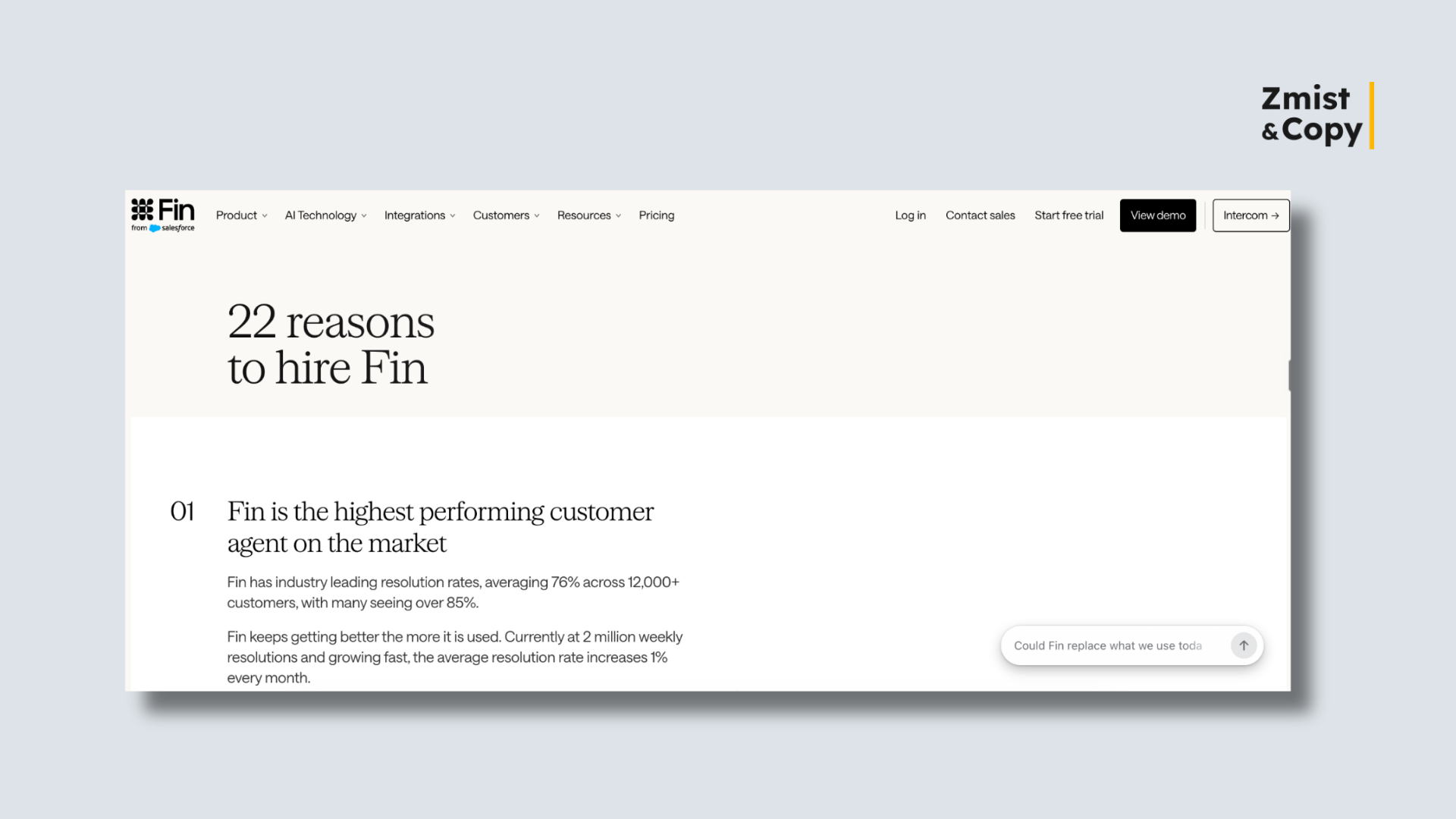
If your agent “handles your workflows,” “works alongside your team,” or “helps your business work smarter,” giving it a name won't make the proposition any clearer. Now you've got Aiden, your newest employee, who... does what, exactly?
Name the agent if it makes your product easier to understand. But then, tell me exactly what it does, what outcome it produces, and why it does that better than the alternatives.
Speaking of human names, if you're not okay with AI agents pretending to be humans, you can use cartoon characters, like Town does with its Townies. Cliff is literally a paperclip wearing a cap.
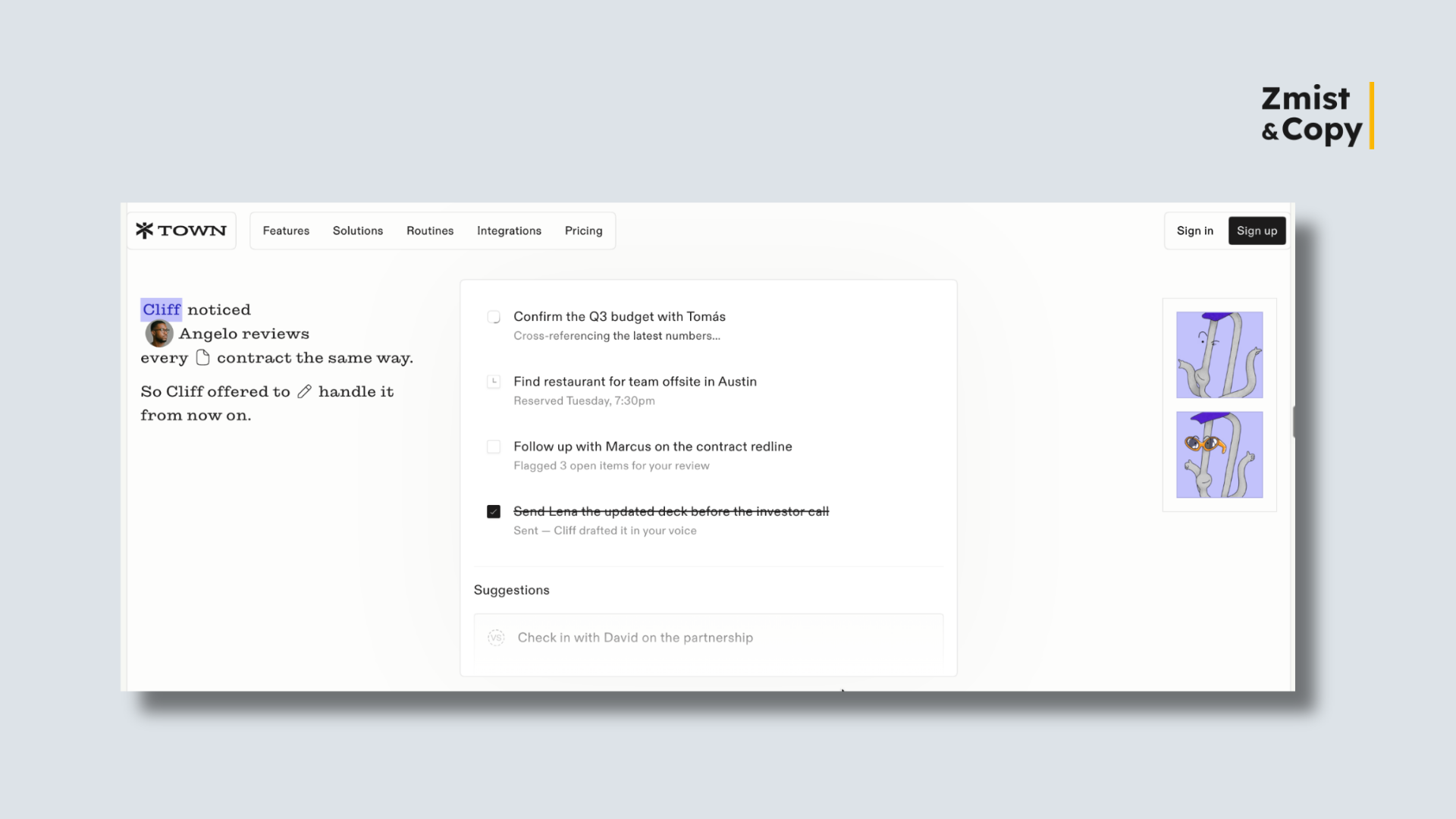
Town is giving its products a personality, but they're not asking the customer to pretend that a piece of software is a human being.
Do you rebrand as an OS or an operating layer?
This is the year everything became an operating system. There's an AI-native OS for retail, for agriculture, for running small coffee shops.
Asana is now "the OS for human-agent teams." Bigzy called itself an AI operating system for commercial landscaping companies, and announced a new category to go with it: "Grounds Intelligence." Nautis launched as an "AI-Native Startup Operating System" covering strategy, fundraising, finance, operations, hiring, compliance, CRM, and documentation.
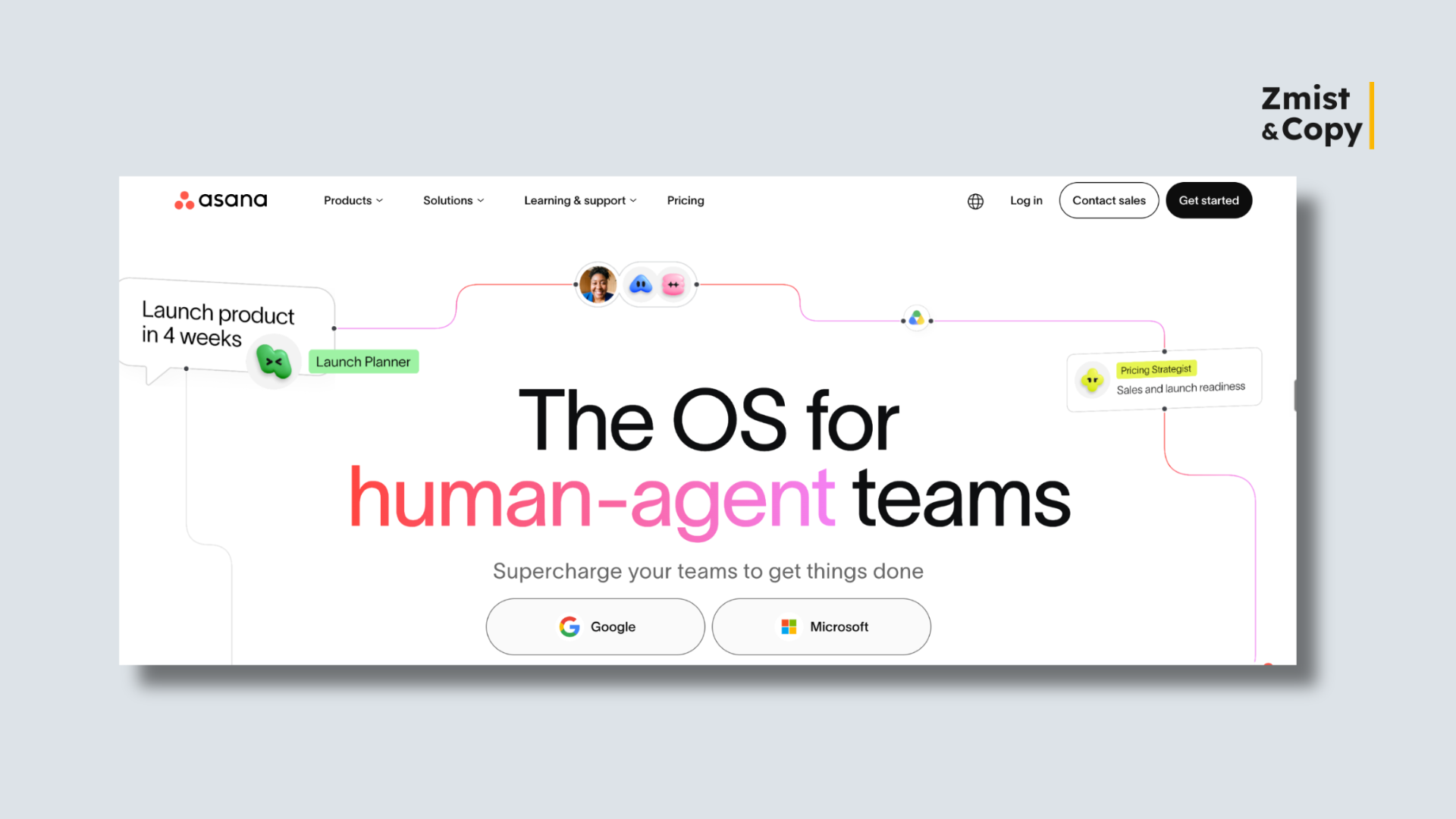
Even actual operating systems are doing it. Microsoft now positions Windows as an OS for AI agents. When Windows has to rebrand itself as an OS, the word has stopped meaning anything.
The appeal is easy to understand. "OS" sounds foundational. You aren't a tool that can be swapped out; you're the layer everything else runs on. Positioning a product as an “OS” lets founders avoid choosing what the product is, because an OS can do everything.
That's the problem.
B2B founders want their products to be one giant platform, and they hope every customer will memorize the 30 things it does, even if they only need one. Buyers don't work that way. They show up with a job: manage customer relationships (CRM), resolve support tickets (help desk), pay employees (payroll). Software categories form around these jobs.
"Operating layer," "AI intelligence platform," and "Grounds Intelligence" don't tell the buyer which problem that product solves, so people don't understand what it does. And they won't do the work of figuring it out for you. Except if you're a well-known brand and buyers already know what you do. Asana can call itself an OS because buyers know it’s a work management tool. "OS" describes how far they've expanded rather than introducing who they are. For a less known company, "OS" doesn't say anything.
If your product does more than any existing category, you have three options:
- Split it, like Stripe. Stripe is a platform, but it sells Payments, Billing, and Connect as separate products, each with its own job.
- Lead with your strongest job. Win the deal with the one thing buyers already search for, then cross-sell the rest once you're in.
- Create the job first, then the category. Clay pulled this off by making "GTM engineering" a job people recognized. This strategy takes years of education and a sizable marketing budget.
Do you slap the word "agentic" on a mature category?
Take any mature software category and go check out the homepages of its representatives. You will likely find the word “agentic” in the taglines.
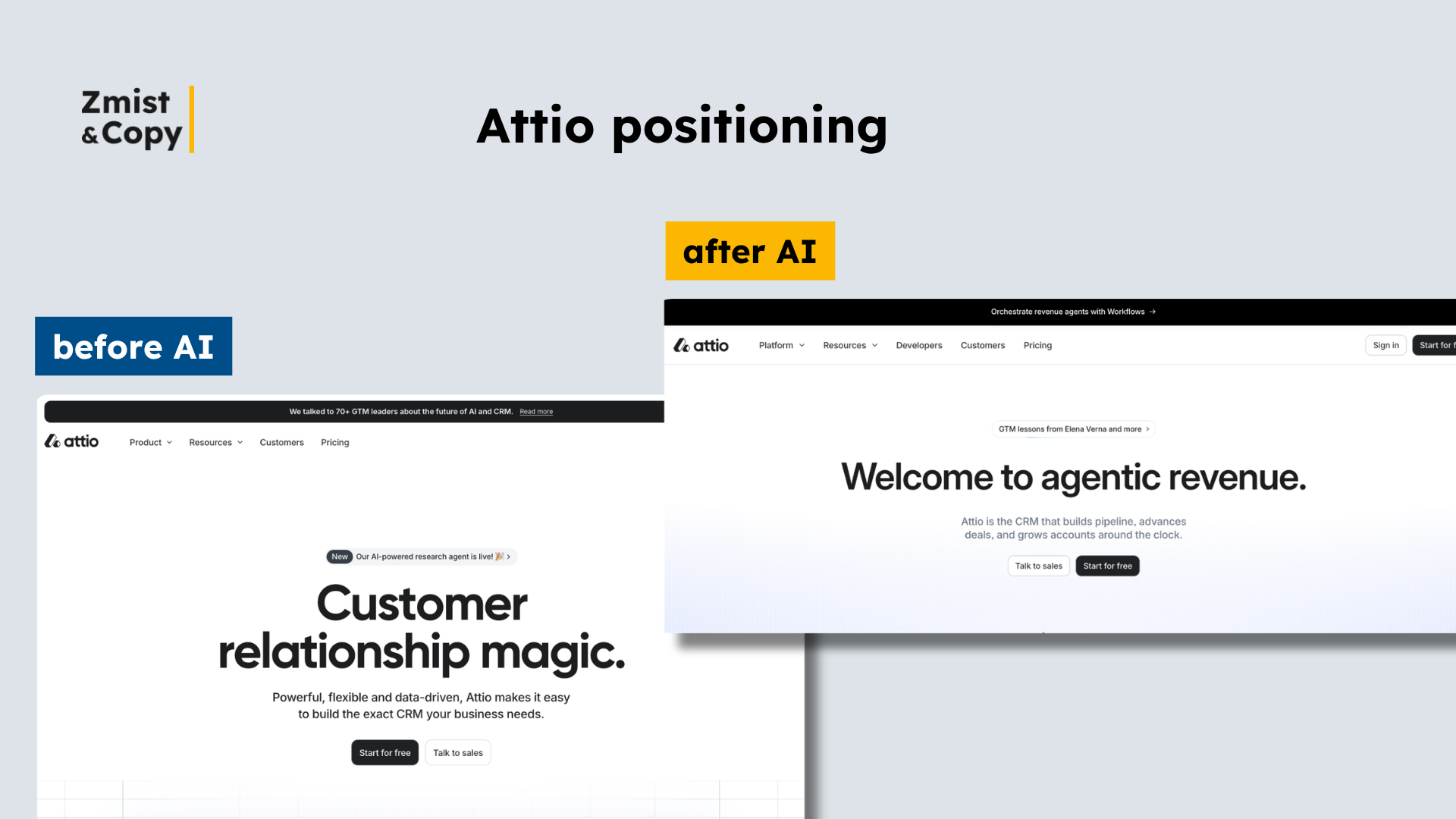
Attio used to be “Powerful, flexible and data-driven CRM.” Now its tagline says "Welcome to agentic revenue."
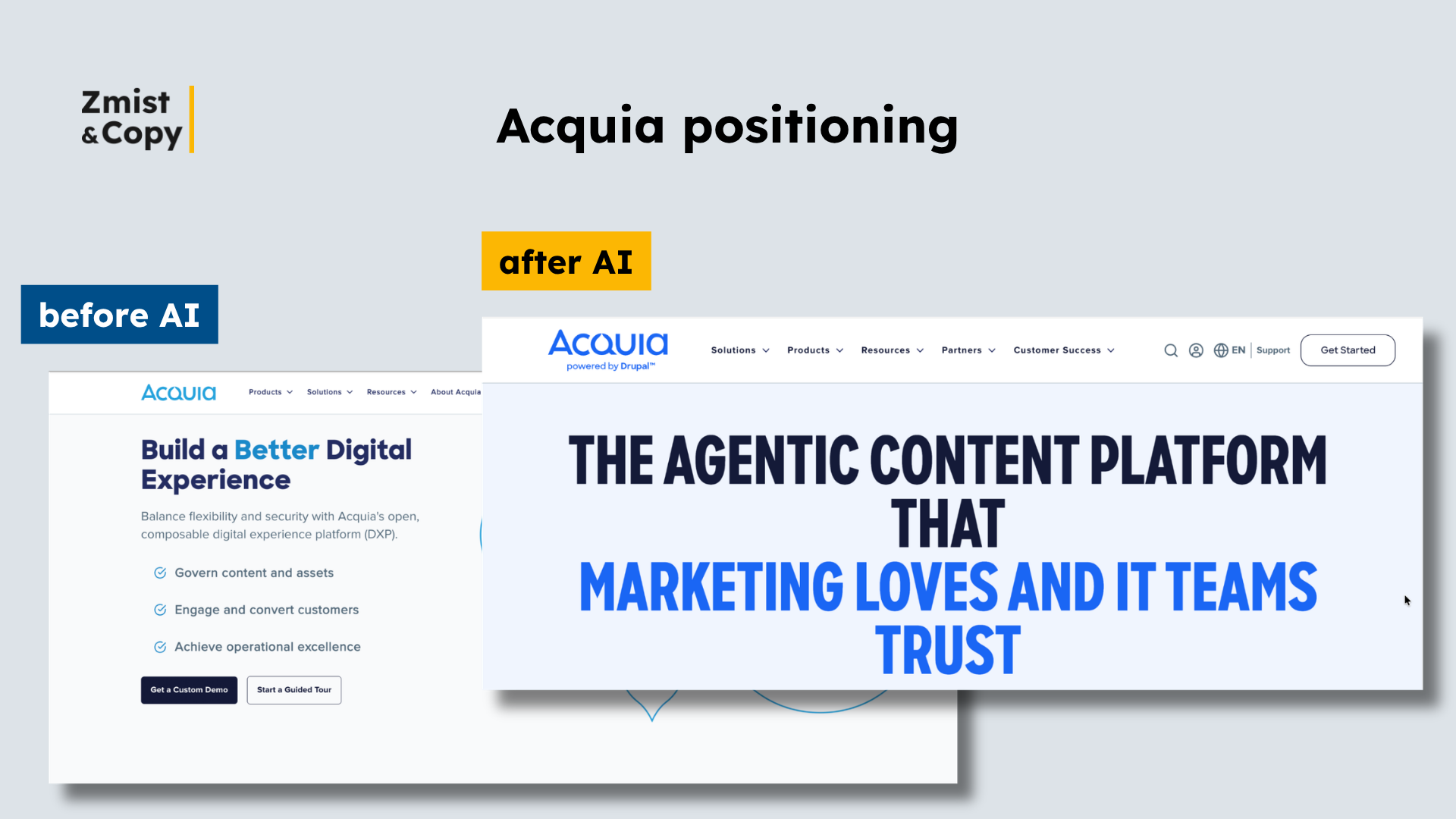
Acquia used to be “open, composable digital experience platform (DXP).” Now it calls itself an "agentic content platform."
For mature companies, "agentic" is a shortcut to saying "we're the modern option." It signals to forward-thinking teams that you were built for how work happens now. Why buy a regular CRM when you could buy an agentic one?
The problem is that the word doesn't stay yours for long. Once the incumbents adopt the same word, the challenger's advantage disappears, and the whole category starts to sound identical.
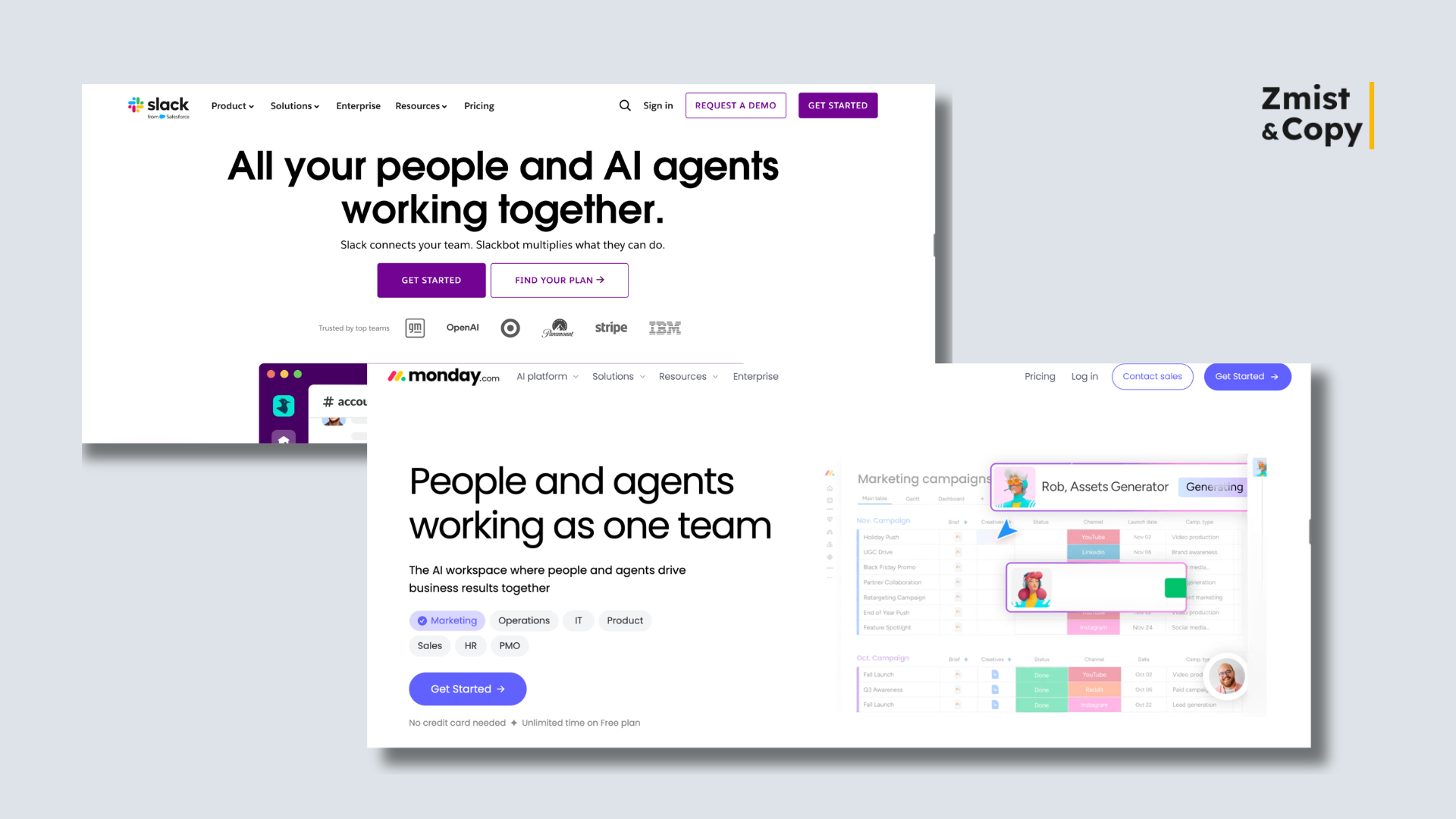
Here's what that looks like. Try matching these headlines to their companies:
"All your people and AI agents working together."
"People and agents working as one team."
That's Slack and monday.com. Two different products from two different categories saying the same thing so you can't tell which is which.
In the enterprise CMS category, major vendors are all making the same promises about AI-powered content operations, AI workflows, speed and scale. Optimizely made a similar promise, but then it rebranded.
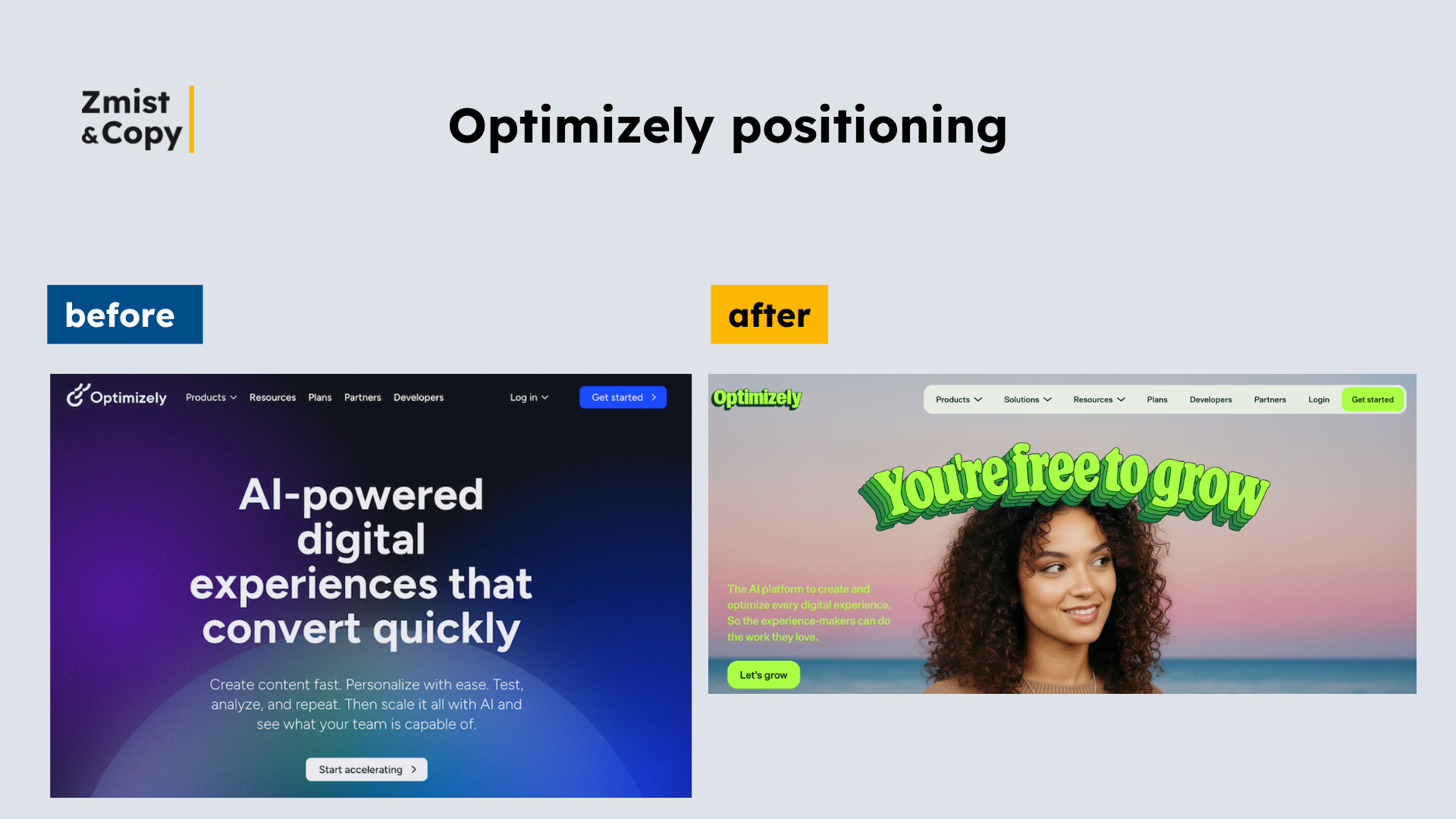
The new visual identity of Optimizely is the opposite of what you'd expect from an enterprise CMS. Instead of dashboards and smiling people in meetings, Optimizely brand features surreal illustrations. You may not know what a man driving a hamster means but you won't confuse Optimizely with Acquia. Instead of promising more speed and scale, Optimizely's big idea is that marketers should be free to grow. Its CEO, Alex Atzberger, says “AI is great at working through tasks, but the actual work - the decisions, the courage, the intuition, the experience - remains deeply human.”
Optimizely has AI but it doesn't make AI the hero. Their message is about the marketer. Put it next to Acquia's "agentic content platform," and only one of them sounds like it was written for the person who'll use it every day.
That's what “it's toasted" looks like. (I wrote more about Optimizely's rebrand here.)
Do you say you keep [job] moving 24/7?
Ramp: "One platform for all of finance. Agents for every workflow, working 24/7."
Fuel Finance: "From close and cash to forecasting and analysis, let AI agents keep finance moving 24/7, while your team stays in control."
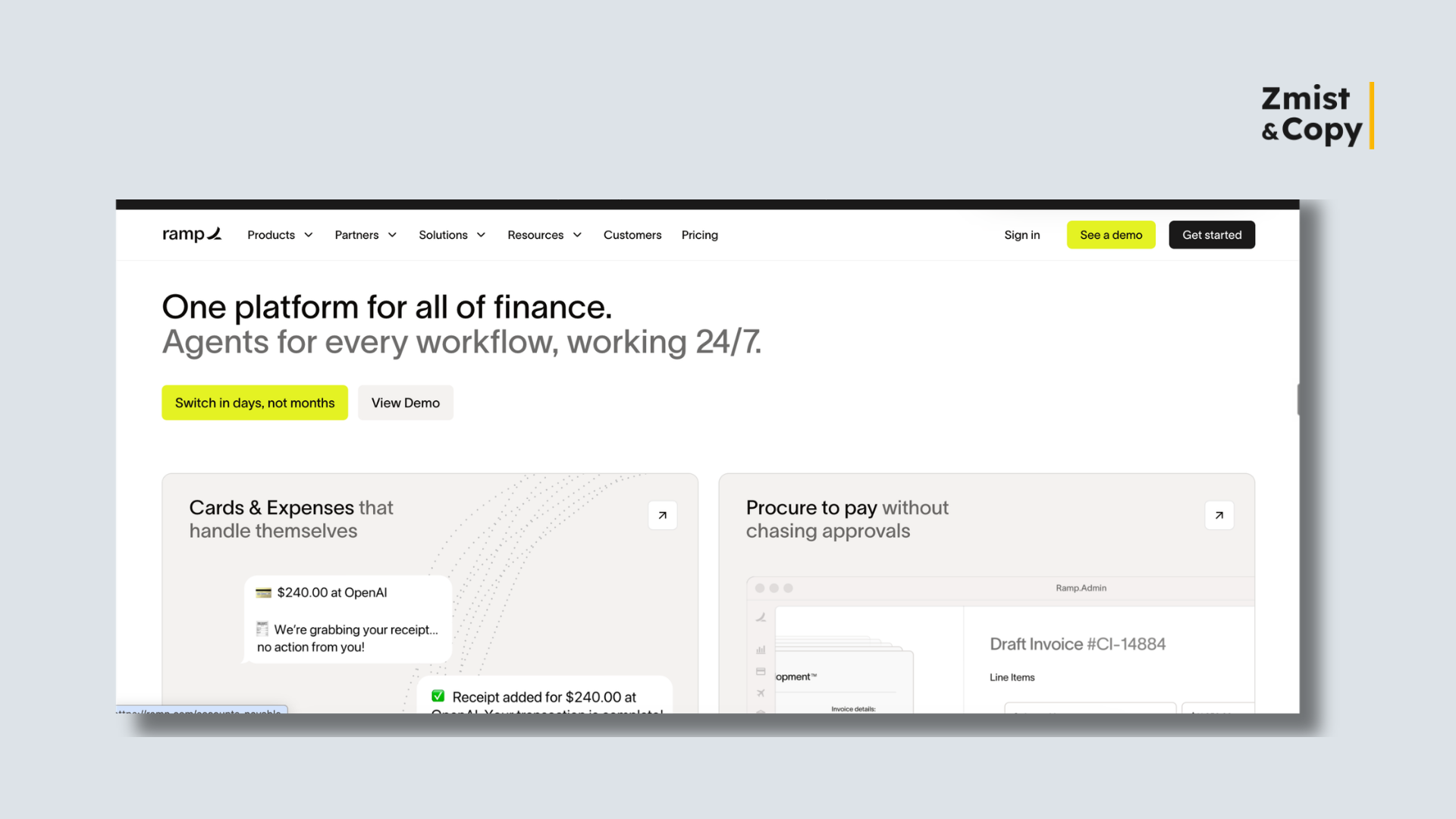
24/7 has become the default promise of agentic software. Your agents never sleep, never take vacation, and close tasks from A to Z while you're offline. It’s much better than humans, who work for eight hours only, right?
But think about what that promise sounds like to the person buying it. If you're waking up in the middle of the night to check that none of your five AI agents are blocked... what exactly are they working on at 3 a.m.? Most B2B jobs don't run on a 24-hour clock. Finance closes the books once a month and nobody approves invoices at midnight.
24/7 describes how the product works, but it doesn't say what it achieves. You can't win on "our agents also never sleep."
This claim may work when the hours themselves are the value, because the work happens while your team is offline. For example, support for customers in other time zones, inbound leads that arrive on weekends, security alerts that can't wait until morning. If this is your case, make sure 24/7 has a clear use case, rather than adding it to your tagline because everyone does.
Let's talk "from A to Z" for a second. The more you promise that agents handle everything end to end, the more reasons you give a careful buyer to doubt you.
Gartner points to in its research on agentic AI: as AI moves from generating answers to taking action, trust, governance, and knowing where the system can fail become increasingly important.
The market is experiencing AI fatigue. Buyers have spent years hearing that everything is AI-powered, intelligent, and autonomous. Vague claims like “automates your entire workflow,” “works autonomously from A to Z,” or “handles everything end to end” can backfire. Buyers are skeptical. You need to show them what your system does, where it fails, what outcome it produces, what evidence supports the claim, and where the human still fits.
Find your "it's toasted"
Named agents, "agentic" labels, and 24/7 promises make you sound like everyone else. OS rebrands and invented categories make it unclear what you do. Both problems come from the decision to make AI the hero of your message.
I'm not saying you should hide AI. Most likely, your buyers are actively searching for "AI [your category]" and you'd be invisible without the term. But you shouldn't position yourself around AI only.
The solution is to lead with what AI enables, not AI itself. Just like cloud computing became commonplace: companies stopped selling “the cloud” and started selling faster deployment, lower infrastructure costs, and easier scaling.
Look at the companies that don't mention AI in their hero at all. Rillet says "Zero-Day Close starts here." HeyReach says “10x your LinkedIn outbound. Unlimited senders, one fixed cost." HockeyStack offers "modern attribution that captures the complete buyer journey." All of them use AI but they don't lead with it. AI is how they deliver the result.
You can use AI in your subhead, your product pages, and your demos, as the reason to believe your promise. That's where buyers look for it anyway. But prioritize saying something nobody else in your category is saying. When every enterprise CMS was promising speed and scale, Optimizely said marketers should be free to grow. Lucky Strike didn't say its cigarettes were healthier. It said they were toasted.


