


Most B2B technology companies struggle with positioning. Vague homepages with taglines that don’t mean anything are a B2B industry norm.
Yet you’re more likely to hear “we just need better copy” from a tech company rather than “let’s make decisions the words depend on.” Because positioning is two strategic decisions.
- Where you play. Does your product live in a mature category with entrenched leaders, an immature one still taking shape, or no category at all?
- How you win. What's the specific slice of the market you own? And what is the reason buyers should choose you over everyone else?
Zmist & Copy helps answer both questions for B2B tech companies. Check out our strategy and positioning services.
This piece covers three market positions, eight ways to differentiate, and offers multiple examples to help you figure out how to nail your own positioning.
Category: Where does your product live in the market?
As the Fletch PMM newsletter points out, every product exists in one of three relationships to its market. Each one has different implications for how you compete, how you communicate, and how hard the work will be.
Position 1: Mature category
A mature category has established vendors, criteria for how buyers choose a product in that category, coverage from analysts such as Gartner or Forrester, conferences, and a shared vocabulary that both buyers and vendors use.
When you position in a mature category, you are telling buyers: "You already know what this is. We are the better version of it."
Your goal is to steal market share.
The advantage: buyers already buy solutions in your category so you don’t need to educate them.
The risk: you are fighting for shelf space against vendors who have more customers, more brand recognition, and more sales and marketing resources. Quite often, this risk is too big for new entrants to overcome.
In “Marketing Warfare” (a book that explains marketing using military principles) Al Ries and Jack Trout argue that the market leader has a defensive advantage that challengers can rarely overcome through direct attack. To win, you either need a significant resource advantage or you need to find a position the leader can't or won't defend.
What position can this be? An underserved segment, for example. In fintech, there is a whole range of startups going for the three billion of financially underserved people globally. Think healthcare marketplace that delivers micro-insurance to rural communities.
DuckDuckGo is another example. It doesn't compete with Google for all search users. It competes for the privacy-minded minority. It's a large enough segment to be worth owning (DuckDuckGo's annual revenue is exceeding $100 million), and specific enough that Google can't serve it without undermining its core business model.
Canva is design software that competes with tools like Figma and Photoshop, but targets non-designers. That segment turned out to be massive, and it's something Figma and Photoshop can't target without rebuilding their product to be as simple to use as Canva, and alienating their core users - professional designers.
Owning a well-defined subsegment in a large mature category is a viable path to a strong business. But it requires being specific about which subsegment and why you.
Position 2: Immature category
Unlike a mature category, an immature category hasn't reached mainstream adoption yet. The vocabulary is forming, a few vendors are operating in it, but most of your potential buyers have never bought anything in this space. This means you're selling to people who haven't heard of the category.
Your goal is to grow the category alongside your own business.
Workflow automation wasn't a new idea when Zapier launched. Companies have been using integration software for years. But most small businesses weren't buying automation tools at all. They were manually copying data between apps and updating spreadsheets.
Zapier sold to category-unaware buyers. It taught small business users that repetitive work could be automated without writing code.
Scheduling software existed before Calendly. But most professionals still arranged meetings through endless email threads. Calendly turned that everyday frustration into a category. Now, this category is mature with players such as HubSpot Meetings, Sprintful, Tidycal and lots of others.
The advantage of this position is that you're not fighting for shelf space. Instead, you're building the shelf.
The risk is that you have to do the educational work yourself, and educating the market is expensive and slow.
Position 3: No category
Sometimes a product is genuinely new. There is no existing category that describes what it does, and no established vocabulary the buyer can use to search for it. To position this product, you must create a category from scratch.
Your goal is to own a new shelf, not grow it alongside your product like in the previous position.
Today, customer relationship management is one of the largest software categories in the world. But when Salesforce launched in 1999, "CRM" wasn't a category that most businesses bought into in the way they do today.
Salesforce helped define a new way of thinking about customer relationships as a company-wide system delivered over the internet. It evangelized the idea through conferences, messaging, and relentless category education until CRM became part of every executive's vocabulary.
Before Large language models, there wasn't an established market for "general-purpose language interfaces" that could write, summarize, generate code, and converse naturally. Buyers didn't have a budget line item called "buy an LLM." There were search engines, chatbots, translation tools, writing assistants, and machine learning platforms, but not a shared category that encompassed all of those capabilities.
The vocabulary itself had to be created: foundation models, LLMs, prompt engineering, context windows, RAG, agentic AI, MCP servers. LLM players like OpenAI spent a lot of effort on educating the market. They had to answer: "What exactly is this thing, and what can I do with it?”
Now, we're in a situation where buyers don't ask, "What is this?” Instead they ask, "Which LLM should we use?"
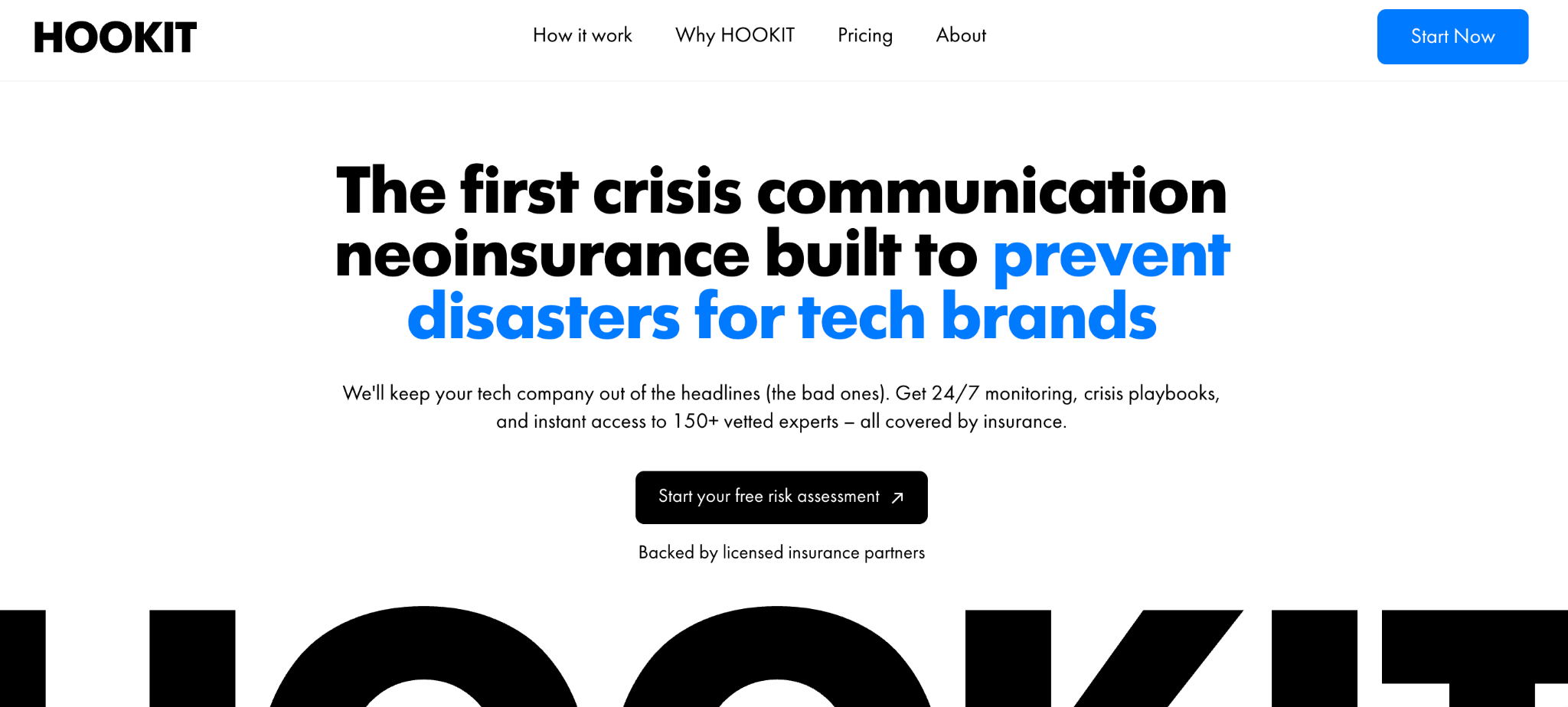
Here is an example from our work. Hookit isn't positioning inside crisis comms, PR, or insurance. It's fusing them into something that doesn't exist yet: "crisis communication insurance." The homepage says it outright: "The first crisis communication insurance.” There's no established category for insurance-funded crisis prevention, preparation, and response. Buyers don’t search for it. But if they discover Hookit, they understand what it is, because it anchors to a familiar category: “Think of HOOKIT as your crisis comms budget, already prepaid and ready to deploy when you need it.”
Creating a new category means refusing every existing label. This is the most ambitious position and the most commonly misunderstood. Many founders want to be in this position. But this is rarely the right choice and almost always the hardest one to execute.
Consider the iPhone. When Steve Jobs introduced it in 2007, he said: "An iPod, a phone, and an internet communicator. Are you getting it? These are not three separate devices. This is one device." He still called it a phone, positioning the iPhone inside the existing mature category.
If Apple had tried to create an entirely new category (personal pocket computing device? mobile intelligence platform?), they would have had to spend enormous resources explaining what the thing was. Instead, the iPhone is a phone, but unlike any phone you've ever seen…
Even revolutionary products don't always need to create a new category. They just need to enter an existing category and redefine it.
When does new category creation make sense?
When you want to create a new category, ask yourself this question first: “If I had to put my product on one existing shelf today, even an imperfect one, which shelf would it be? And would that label hurt more than it helps?”
If the answer is "yes, it would hurt" you're building a new category. If the answer is "it's imperfect but workable" you're in a mature or immature category, and the work is finding the right differentiation angle within it. Speaking of which…
8 ways to differentiate
Once you know where you're positioned, you need to decide how to differentiate. The market (mature, immature, or new category) answers where you're fishing (in the lake, in the sea, in the ocean). This section answers where in the lake, and with what.
Over the years, we've noticed that almost every successful positioning strategy combines two decisions:
- Who you are for. What's the specific part of the market you choose to own?
- Why you're different - the unique reason buyers should believe you're the best choice.
Many companies only make the first decision. They pick an industry or customer segment, but once they're compared against competitors serving the same audience, they look identical. When that happens, the buyer falls back on price, or on whichever vendor they'd heard of first.
Strong positioning answers both questions: “Who you are for and why you, and not the three other companies.”
Who you are for
What's the specific part of the market you choose to own? You can niche by industry, a specific use case or job to be done, and persona.
1. Niche by industry
The most common differentiation angle is a vertical focus. You take a mature category and claim a specific industry or even a niche within this industry as your territory.
In software development, industry-specific problems require industry-specific knowledge. A logistics company doesn't need software developers who know how to code in React. It needs developers who understand TMS integrations, dispatch logic, and real-time fleet data.
Likewise for corporate learning providers. They need engineers who know SCORM, xAPI, LTI standards, and CPD compliance. Bringing in just "coders” means a prolonged discovery phase, higher risk of rework, and an engagement where the client has to act as the domain expert.
How do you know if the industry is the right differentiation angle?
- The category has meaningful domain complexity that takes time to learn
- Buyers are skeptical of generalists and ask for vertical experience early in evaluation
- A track record in the industry is itself a form of proof
- The vocabulary in your category differs significantly by vertical
Here are a few examples from our work.
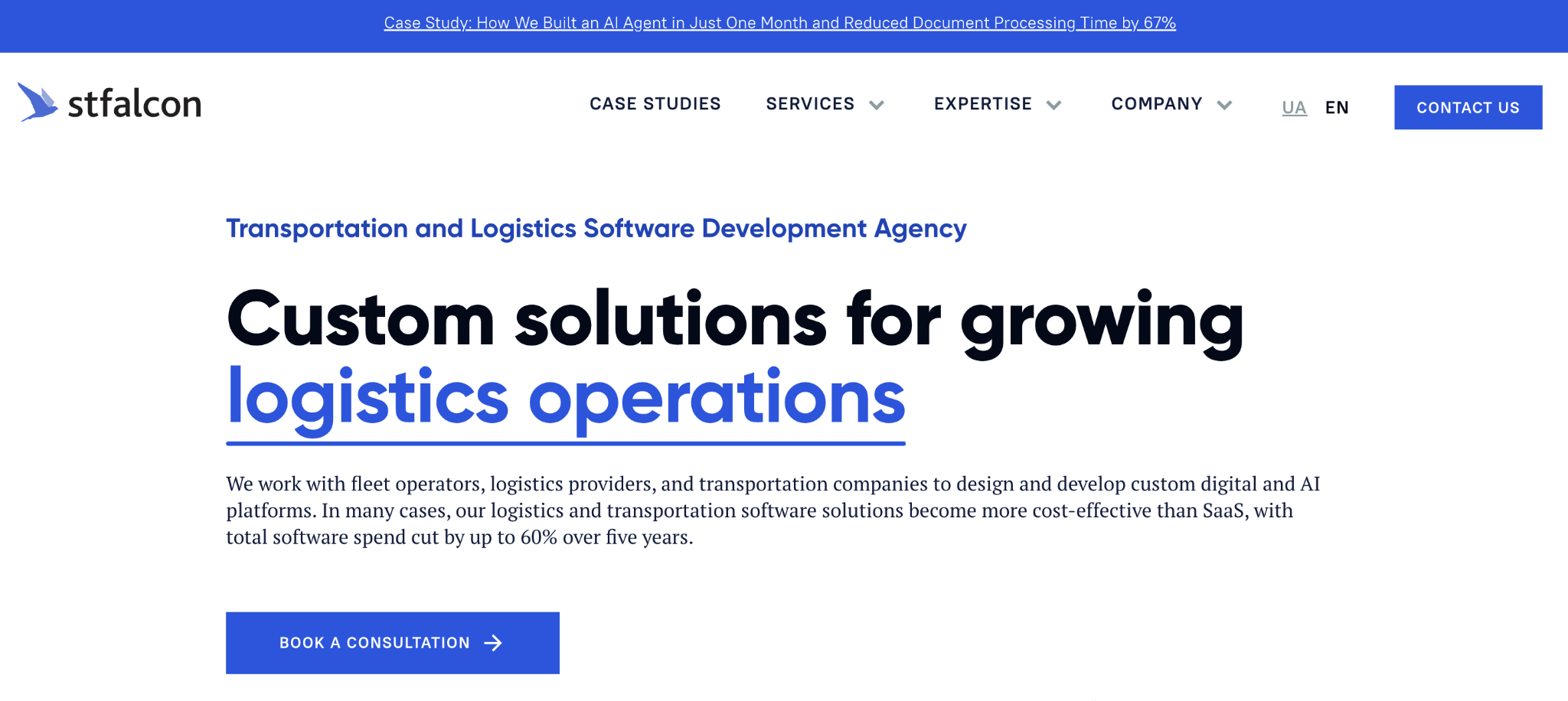
In a market full of outsourcing companies, Stfalcon focuses exclusively on logistics and transportation. Having worked with companies like MeinFernbus and Ecolines, they bring proven industry expertise rather than generic development experience.
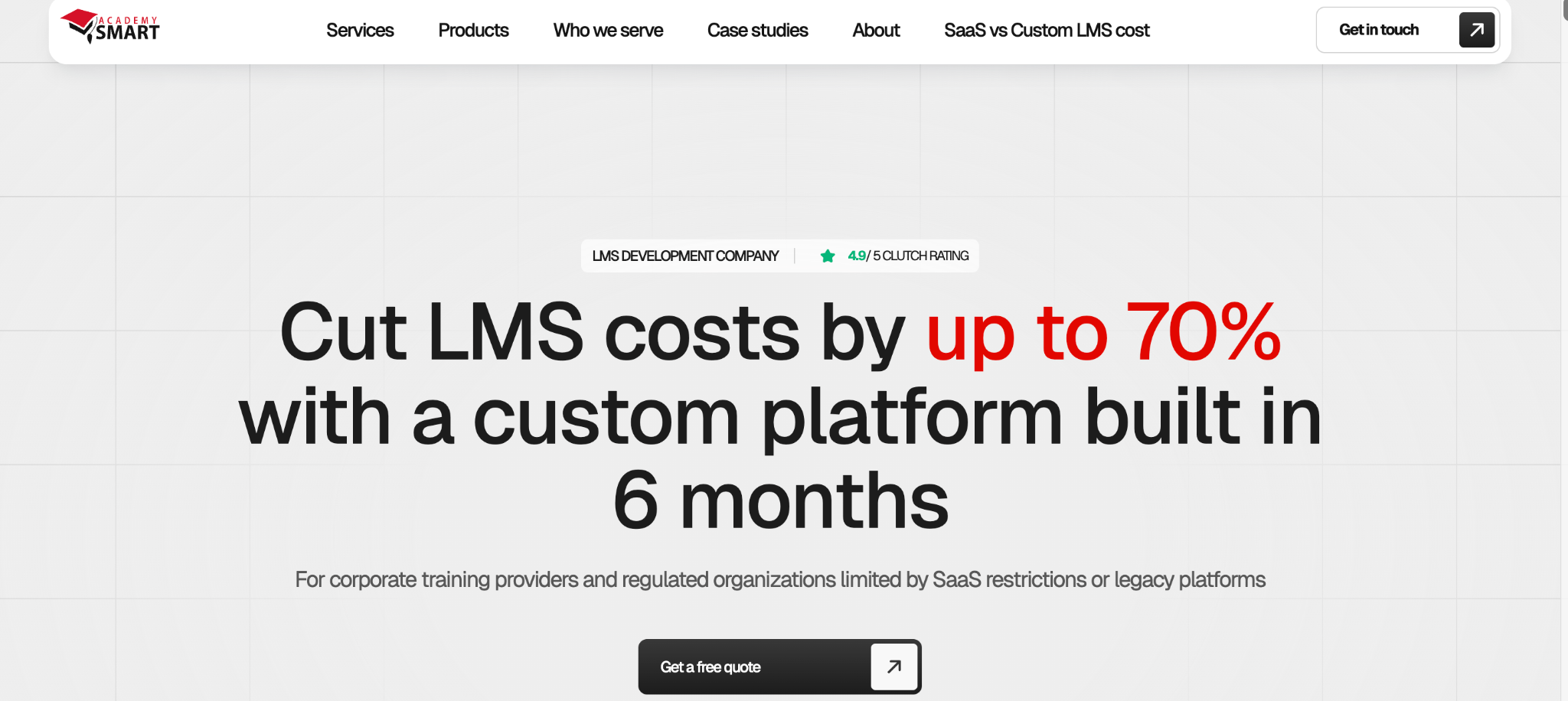
Academy Smart positions itself as an LMS development company. They have secured a partnership with Learn Upon to deliver custom integrations to their customers, and built their own starter LMS that they sell as a white-label product. That value proposition makes them an attractive option for growing corporate training providers and regulated organizations.
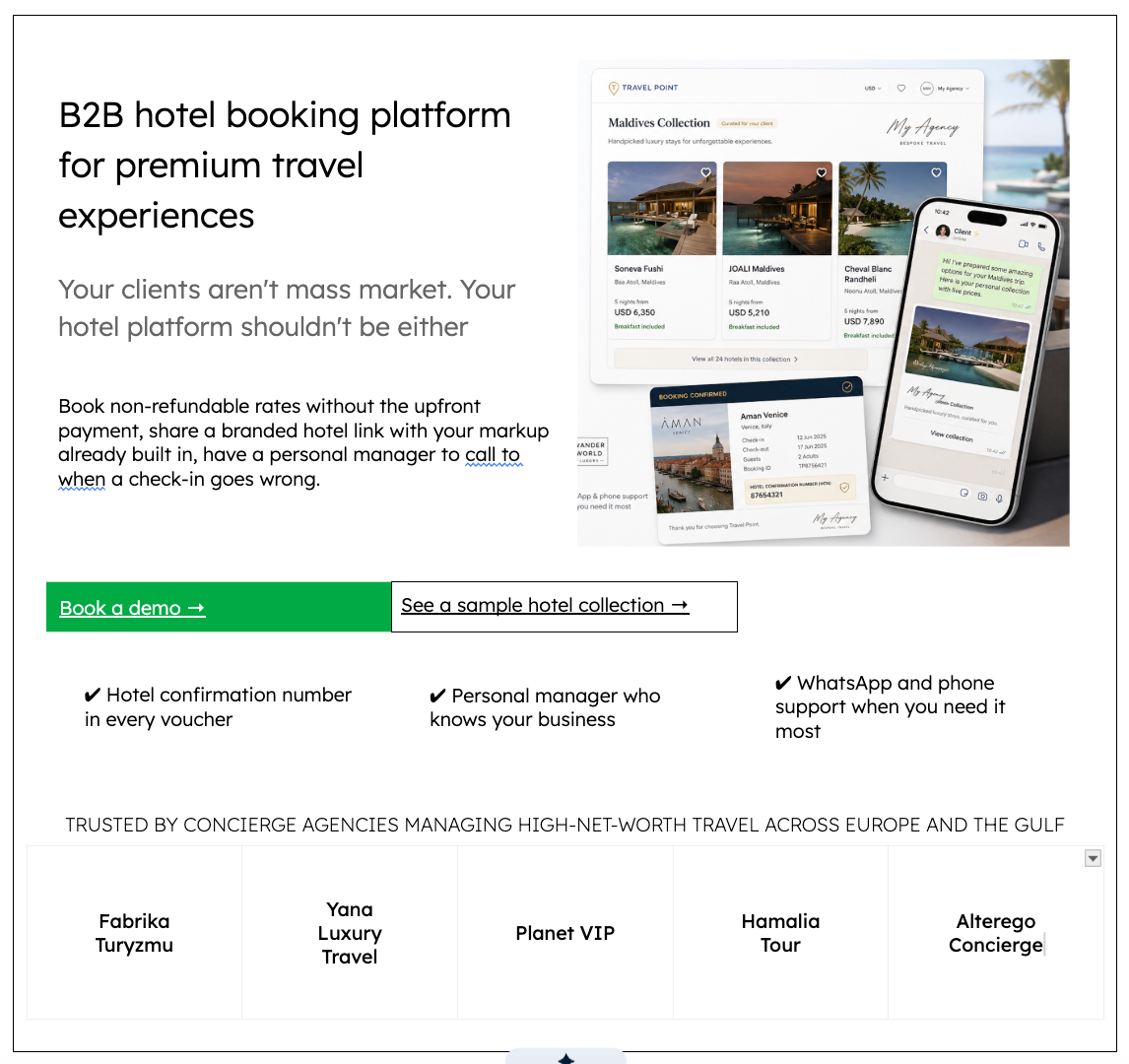
Travel Point takes the vertical niche to an extreme. The B2B hotel booking platform market has established players, such as RateHawk, HotelBeds, and Vitiana. But all of them are built for agents booking mid-range hotels in large volumes. Travel Point is built exclusively for concierge travel agents serving HNW clients. No existing platform serves this buyer at all.
2. Niche by use case/job to be done
The use case angle narrows by job-to-be-done. You claim a specific outcome, problem, or workflow you're the best solution for. The buyer you're targeting could come from many industries, but they all have the same job to get done.
When a mature category contains several distinct use cases that require different approaches, you can position your company around one of them. For example, a broad category "developer tools" includes dozens of different jobs: debugging production issues, testing APIs, managing feature flags, monitoring performance, securing dependencies, deploying infrastructure. A tool that becomes synonymous with one critical job is far easier to market.
The product category "software development company" also contains lots of jobs: MVP development, legacy codebase modernization, software compliance, agentic AI implementation, etc. A company that tries to claim all of these jobs looks like a Chinese marketplace selling everything or a restaurant with a 30-page menu. It's unlikely to be the first choice for any specific job, unless it has an unfair advantage like Accenture's brand.
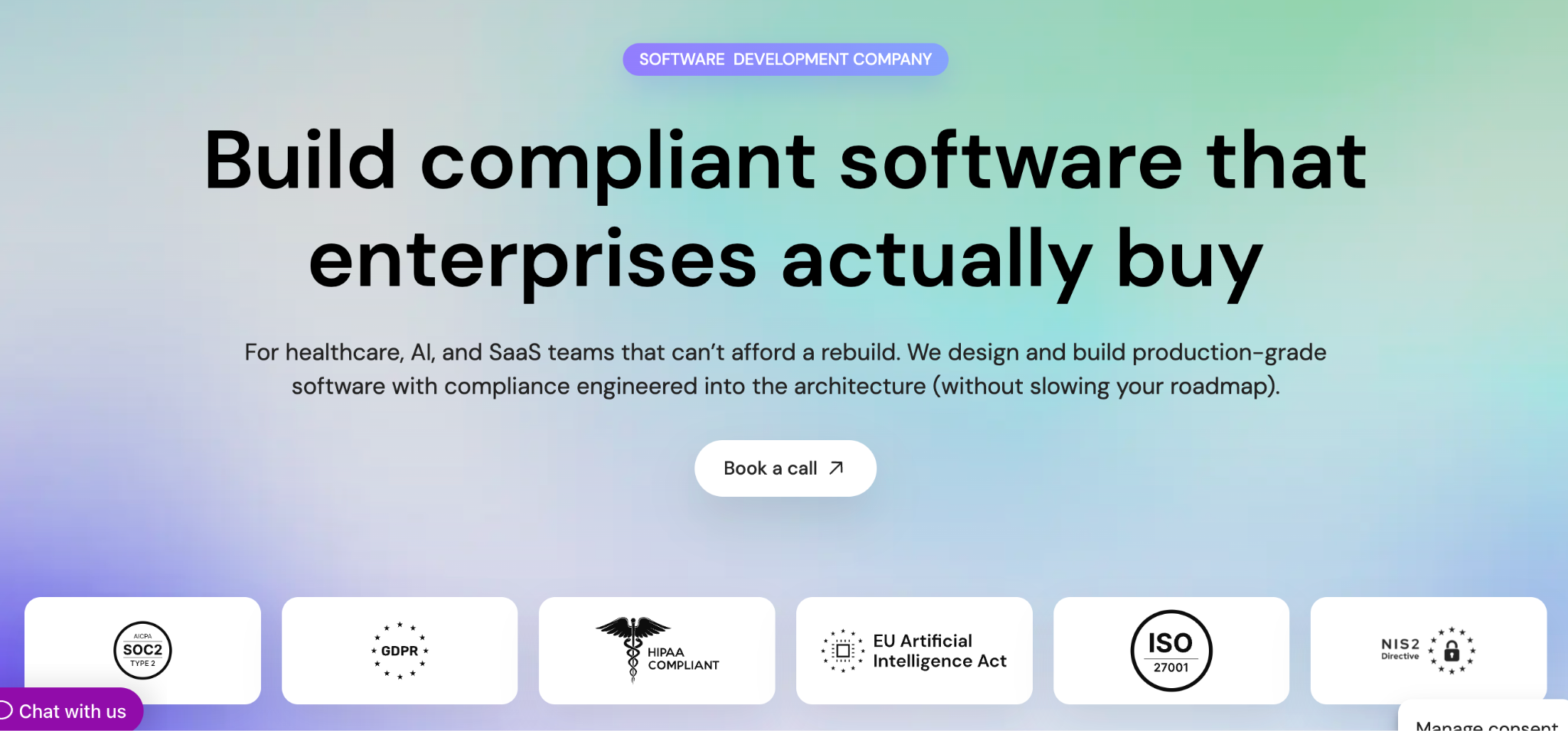
CorpSoft is a good example of the niche by use case positioning angle. They're a software development company but their use case is specific: end-to-end software development with compliance engineered in from the start. The buyer is a growth-stage startup that is at risk of losing enterprise deals because their codebase wasn't designed for compliance.
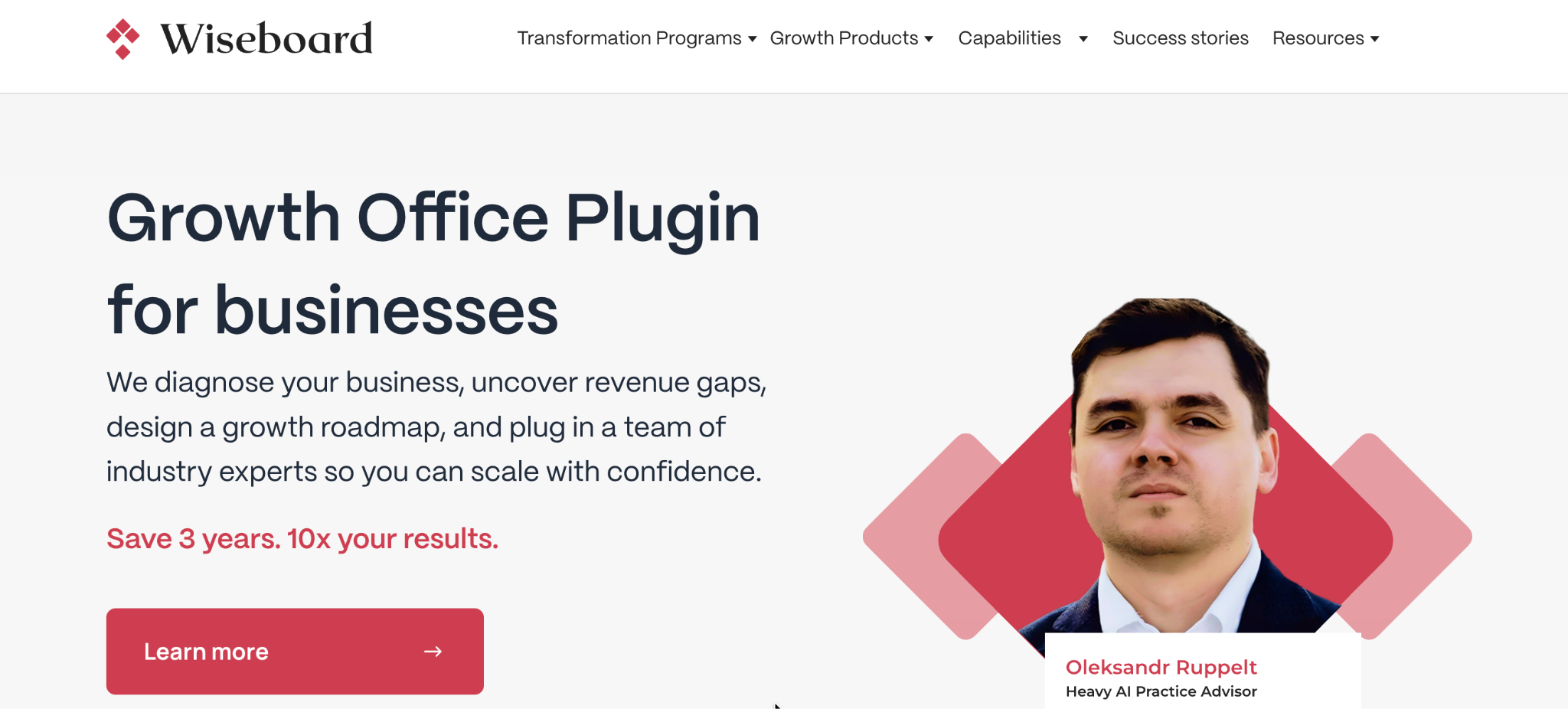
Wiseboard operates within a broad category of business consulting. Their specific use case: growing revenue for software development companies that have plateaued through fixing the root cause across business functions, entering enterprise markets, or building toward an exit.
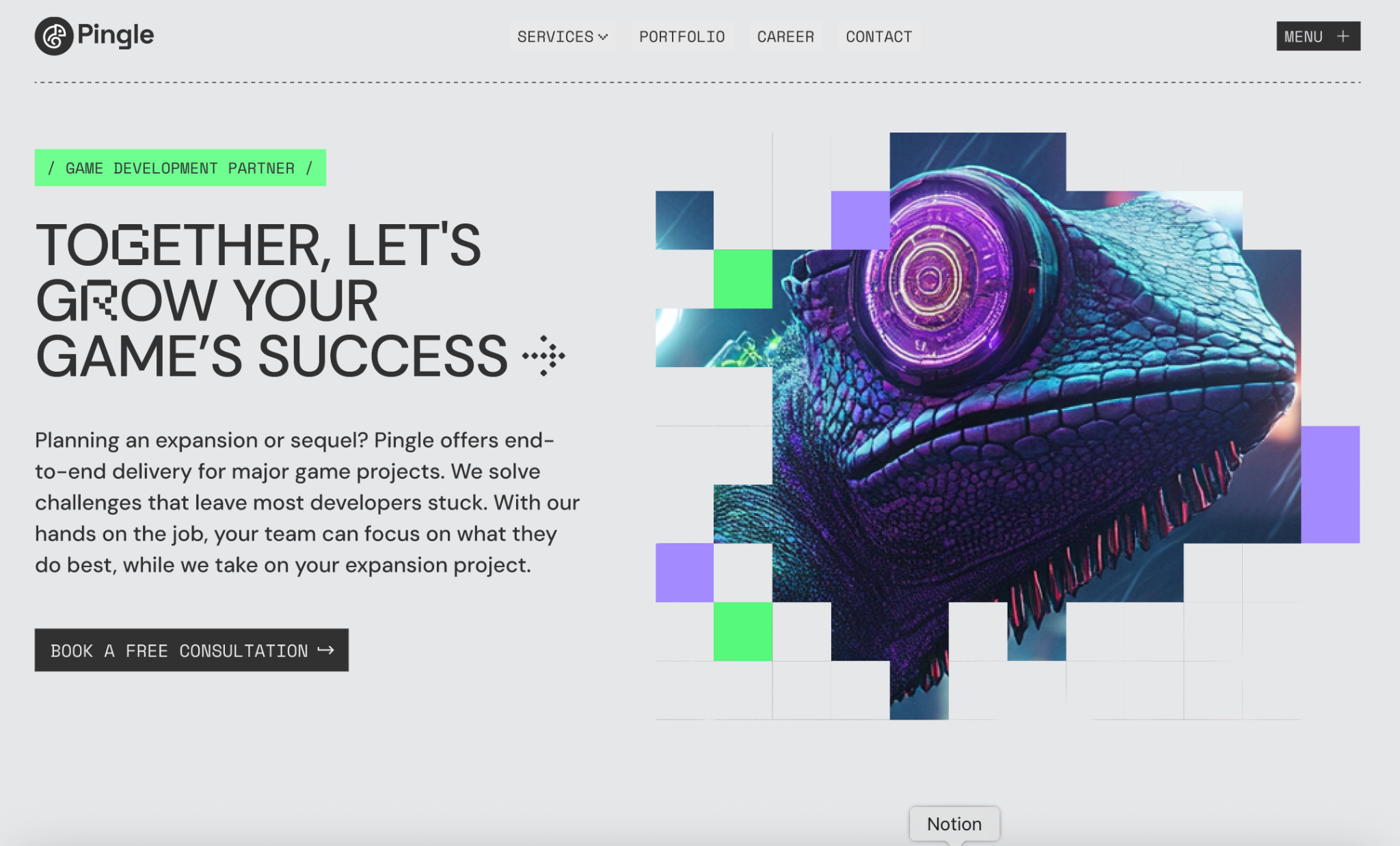
When we worked on positioning Pingle, a game development outsourcing company, our research uncovered an interesting insight. Game publishers describe their needs in terms of technical capabilities: they need a partner for porting, content development, or live project support. But those aren't the real jobs they're hiring for. What they're actually trying to accomplish is this: "We already have a successful game. We need a partner who can help us scale that success." That insight became the ground for our positioning strategy: away from individual services and toward the outcome customers care about.
3. Niche by persona
Persona-based positioning narrows by the specific buyer's situation, worldview, or psychology. The product may be used by many types of companies for many purposes, but you choose one buyer profile and speak to how they experience the problem.
The key is that persona positioning requires more than a job title. "CTO" is not a persona. "CTO of a Series B company who has built a team of contractors and freelancers, and knows that individual dependency is the reason they can't scale" → that is a persona.
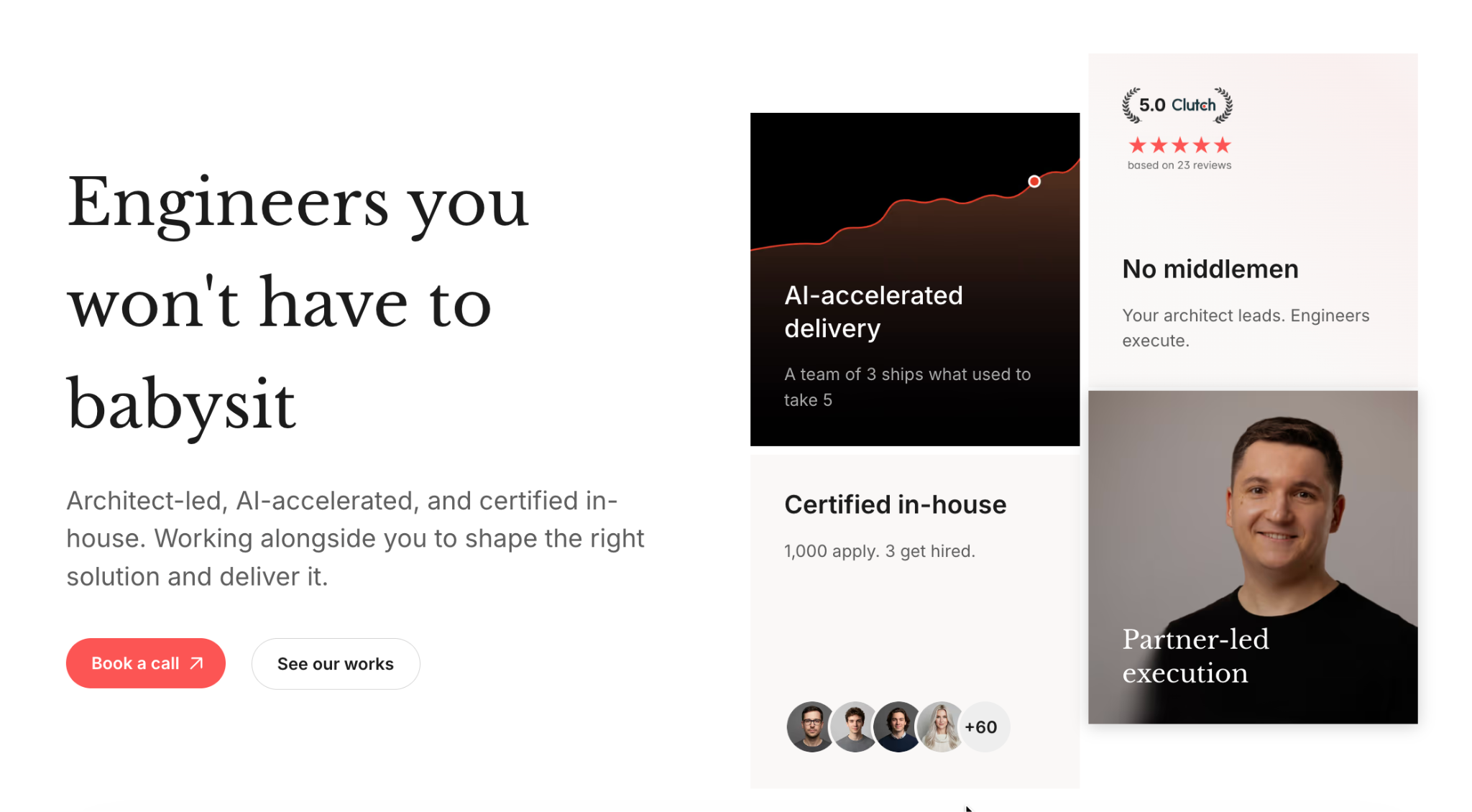
For example, Radency's buyer is a CTO that had a previous negative outsourcing experience: contractors who needed hand-holding, missed deadlines, code that couldn't scale, communication gaps, the sense of managing vendors instead of building a product. Radency's positioning addresses each of these problems. Partner-led engagement with no sales-to-delivery gap. Certified engineers trained in-house to be product-aware, not just technically skilled. AI-augmented workflows that deliver 30% faster without sacrificing quality. Because they sell to CTOs, their own CTO leads the marketing effort, sharing expertise on LinkedIn and through technical content.
Why you are different
What's the unique reason buyers should believe you're the best choice? There are five ways to differentiate a product. Read also: how to create differentiation.
1. Broken alternatives
This angle says: “All the alternatives share the same fundamental flaw, and we are the only thing built differently.”
It's not just about "we're better," it's about “they're all wrong in the same way."
For this angle to work, the flaw has to be recognizable. It has to be the thing the buyer has been frustrated by, even if they couldn't name it.
Looqme is the most precise example in our portfolio. They're entering a market intelligence and media monitoring category full of established players, such as Meltwater, Cision, Talkwalker, traditional research firms, agencies, BI dashboards.
All of these alternatives share one of two flaws: they either give you scale without interpretation (dashboards full of data you still have to analyze yourself), or interpretation without scale (analysts who work from limited datasets and take months to deliver).
Looqme's positioning is Narrative Decision Intelligence. They process billions of data sources, interpret the findings by analysts, and deliver insights in decision-ready formats. Every existing tool gives you either data or insight. They combine them.
Here's another example from our work.
Game development outsourcing is a mature category with a trust problem. Vendors miss milestones, fail console certifications, and deliver work that falls short of what was promised.
Pingle realized that when an external team isn't responsible for the project's direction, scope, deadlines, and outcomes, misalignment is inevitable.
Their positioning is built around a different model: full-cycle game development ownership. Instead of acting as an extra pair of hands, they take responsibility for delivering the project.
The angle “positioning against broken alternatives” often sits close to new category creation, but it doesn't require inventing a new category label. The buyer already knows what they're shopping for. You're just showing them that everything they've previously considered has the same blind spot.
2. Different operating model
Your advantage comes from how you deliver rather than what you deliver. This could be an embedded team model, outcome-based pricing, AI-assisted delivery, productized services, or another operating model that changes the customer experience.
Examples:
- Embedded product teams vs project outsourcing
- Outcome-based pricing vs time & materials
- Productized service vs custom consulting
Operating-model differentiation is durable because it's hard to copy without rebuilding the business.
Eleken is our own case study in this. The UI/UX design category is mature and crowded with agencies. Eleken's differentiation is a different operating model: a full-time product designer for a predictable monthly fee, priced like a SaaS subscription rather than a project.
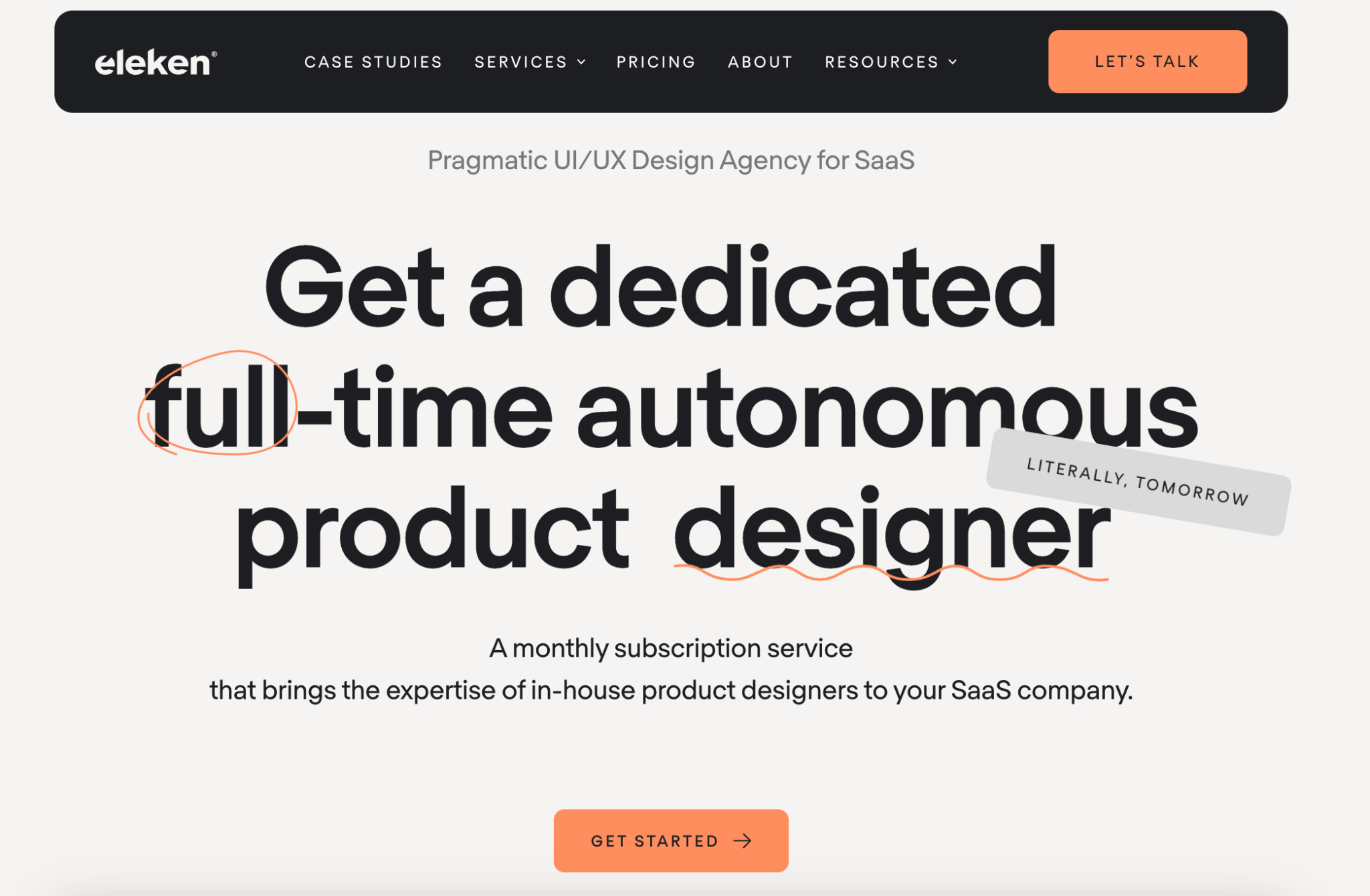
The positioning we built for them centers on pragmatic design. The word "pragmatic" means efficient and predictable. A traditional agency cannot say this without dismantling how it bills.
DesignJoy runs a productized design subscription, delivering unlimited design requests at a fixed monthly rate, deliberately eliminating the account managers and project overhead that agencies carry.
Superside provides a globally-distributed design workforce delivering at enterprise scale through a subscription, replacing both the in-house team and the traditional agency.
Palantir's Forward Deployed Engineers are perhaps the most influential operating-model innovation in enterprise software. Instead of shipping software, Palantir embeds engineers inside the client to build alongside them.
See more examples of differentiation by business model.
3. Unique methodology or philosophy
Your differentiation is based on a distinctive way of thinking. Rather than simply providing a service, you introduce a framework, methodology, or philosophy that changes how buyers approach the problem.
This angle works when the buyer's obstacle is conceptual. They don't just need the work done, they need a better way to think about the work. Unlike broken alternatives (which attacks existing solutions), this attacks conventional thinking.
A proprietary methodology becomes an ownable asset. It travels through content and builds a memorable brand.
Basecamp is the archetype. In a crowded project management software space, their philosophy, codified in Shape Up and It Doesn't Have to Be Crazy at Work is their differentiation.
This is the hardest angle to execute, because a methodology has to be distinctive to carry positioning weight. Very often, companies just create a rebranded version of what everyone does. For example, software agencies often have a proprietary-sounding name for how they kick off a project: a "Discovery Sprint," a "Product DNA Workshop," a "Blueprint Phase," an "Ignite Session."
Underneath the branding, they're all running some version of the same three well-known frameworks: Google's Design Sprint, Design Thinking, and Lean Startup's build-measure-learn loop. Interview users, map the problem, sketch solutions, prototype, validate.
For a methodology to carry positioning weight, it has to change what the buyer gets as an outcome.
4. Better economics
You win because you deliver a different economic outcome. This can be faster delivery, lower total cost of ownership, higher ROI, or greater leverage through automation, AI, or proprietary processes.
Economics has to be structural. Anyone can be cheaper by cutting margin. An economics angle means your model produces a better number as a consequence of how it's built.
Academy Smart competes on economics grounded in reuse. Because they've built a starter LMS, they don't start from zero. This translates into roughly 50% faster delivery compared to companies offering custom LMS from scratch. The cost advantage is a lower total cost driven by not rebuilding what already exists.
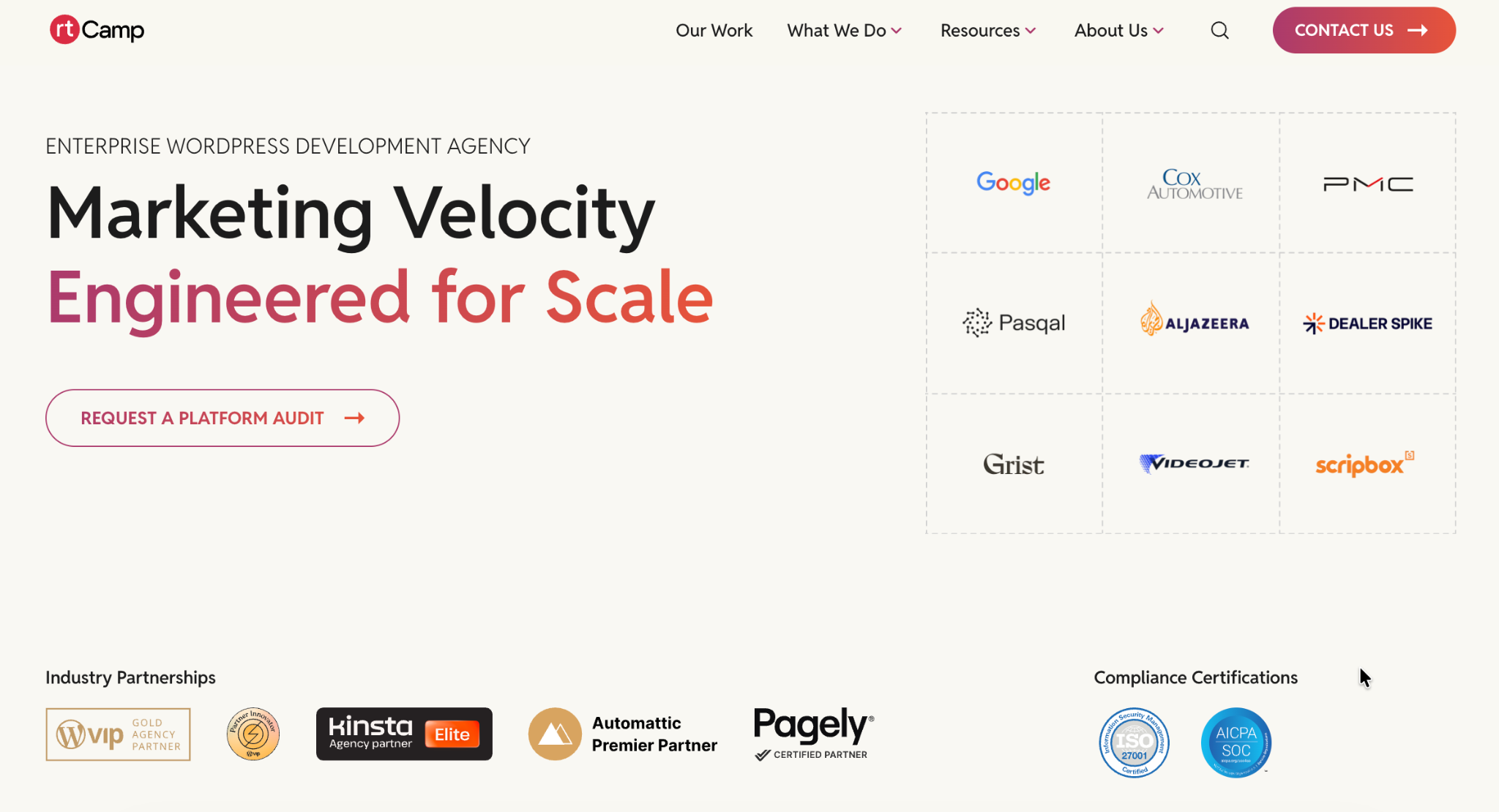
rtCamp's economics come from open source. By building on WordPress and their own open-source OnePress framework, they let enterprises replace expensively-licensed DXPs (Adobe AEM, Sitecore, Kentico) with infrastructure the client owns.
Pingle turns economics into a risk-sharing model. For porting projects they offer fixed pricing and for ports and remasters they'll offer a revenue-share arrangement, aligning their own upside with the game's commercial success rather than billing purely for hours. That's a different economic relationship.
5. Unfair advantage
Some companies are hard to copy because they hold assets a competitor can't easily acquire: proprietary technology, exclusive partnerships, unique datasets, open-source leadership, a distribution advantage, or years of accumulated domain authority.
As a LearnUpon partner, Academy Smart receives projects from a major SaaS LMS vendor. That relationship is both a credibility signal and a distribution channel competitors can't replicate by trying harder.
rtCamp is WordPress core contributor, a WordPress VIP partner, and closely tied to Automattic (the company behind WordPress itself). In a market full of agencies that merely use WordPress, rtCamp helps build it. That standing brings enterprise clients, wins trust, and cannot be acquired quickly at any price.
A vague claim of "deep expertise" is not an unfair advantage. Everyone can say that. A partnership, a core-contributor status, an exclusive data source, a genuine distribution lock are assets. If you can't point to the specific thing a competitor would have to spend years or millions to replicate, you don't have this angle.
Where to go from here?
Knowing the positions and the differentiation angles is one thing. Landing on the right one for a specific company is the work.
When we define positioning for a client, we start with analyzing existing customers, then building the ICP so we know exactly who we're for. We also run competitive analysis to find the angle nobody else can claim and clarify the value proposition until "why you, and not the other three" has an answer. Then we document all of it on the homepage.
Each of those steps is its own discipline. We'll break them down one at a time on this blog.


