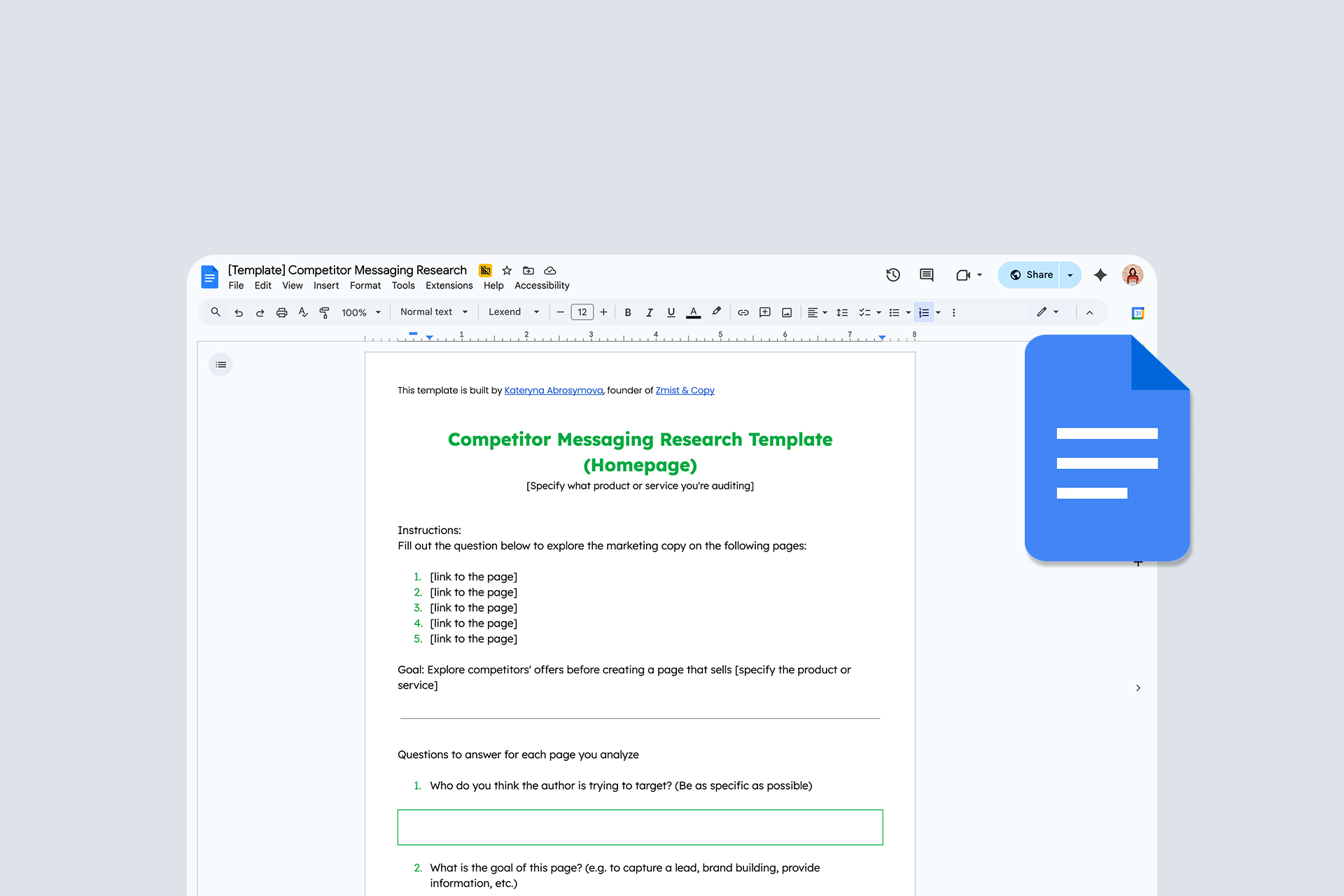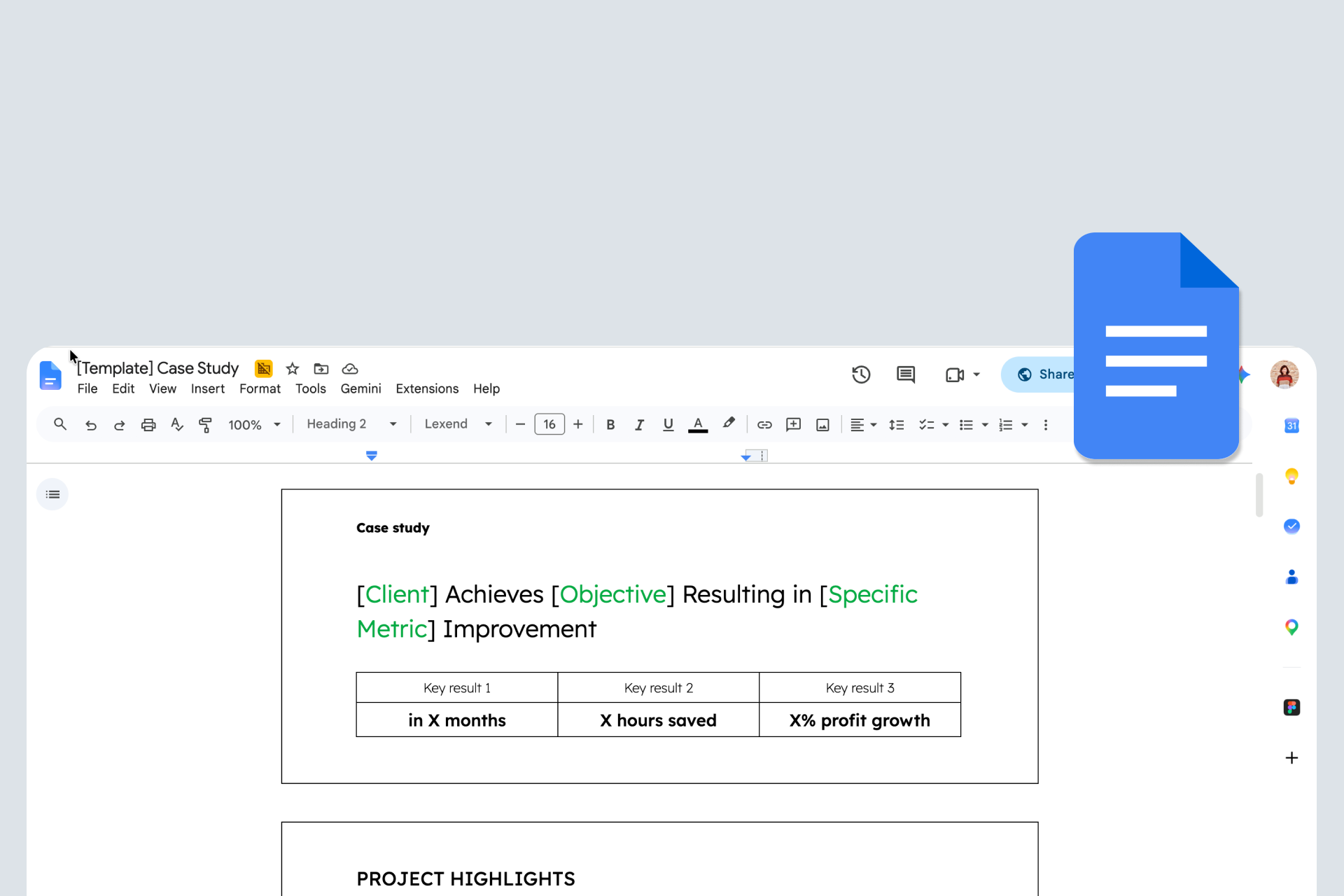
This template is built on Results-Forward — our framework for case studies that lead with the outcome. Instead of a generic problem–solution–result write-up, it walks you through the order that converts: the claim you're proving, then Result → Story → Methodology → Impact. It also includes optional elements like CTAs, customer quotes, and project highlights for added impact. Customize it freely to fit your needs. Below, you'll find tips on writing compelling case studies.
Most case studies open with what a company did and save the outcome for the end, where few readers ever reach it. Results-Forward flips that. You decide which positioning claim the case study has to prove, lead with the result that proves it, and let the story earn the number. It's also the format AI tools like ChatGPT, Perplexity, and Claude are most likely to cite, because specific outcomes are quotable and vague ones aren't.
Every block in this template maps to one part of the framework:
We developed this method to teach writers how to craft effective case studies. Here's the step-by-step approach:
1️. Start with the solution: It's the easiest part to identify.
2️. Describe the client's problem: Gather insights by talking to people or listening to the first client conversations. If your sales team doesn't record their discussions, encourage them to start.
3️. Define the problem's cause and impact: These aspects might not be immediately obvious. Use logical thinking to find them.
4️. Identify an alternative solution that failed: Determine what other solutions were considered and why they didn't work.
5️. Revisit the solution to discuss implementation challenges: Highlight the ups and downs that make the story compelling. Use your interviewing skills to extract details from the software developers.
6️. Highlight your unique approach: This is your "secret recipe" or value proposition. Ensure it stands out.
7️. Describe the results: Show the opposite of the problem. Detail what the client achieved by using your solution, including quantifiable results and the positive impact on their business.
Want to learn more? Read our article "How to Write Case Studies: 6 Best Practices for Software Development Companies"
We’ll find the strongest stories, interview the right people, and write case studies that close deals.