

Pingle Studio is a Ukrainian AAA game development company. Over 18 years, it has grown to a team of 400 people and built a portfolio spanning titles like FNAF, Tomb Raider, THE FINALS, Poppy Playtime, and Risk of Rain 2. The studio partners with leading game companies including EA, Square Enix, Epic Games, and Embark Studios.
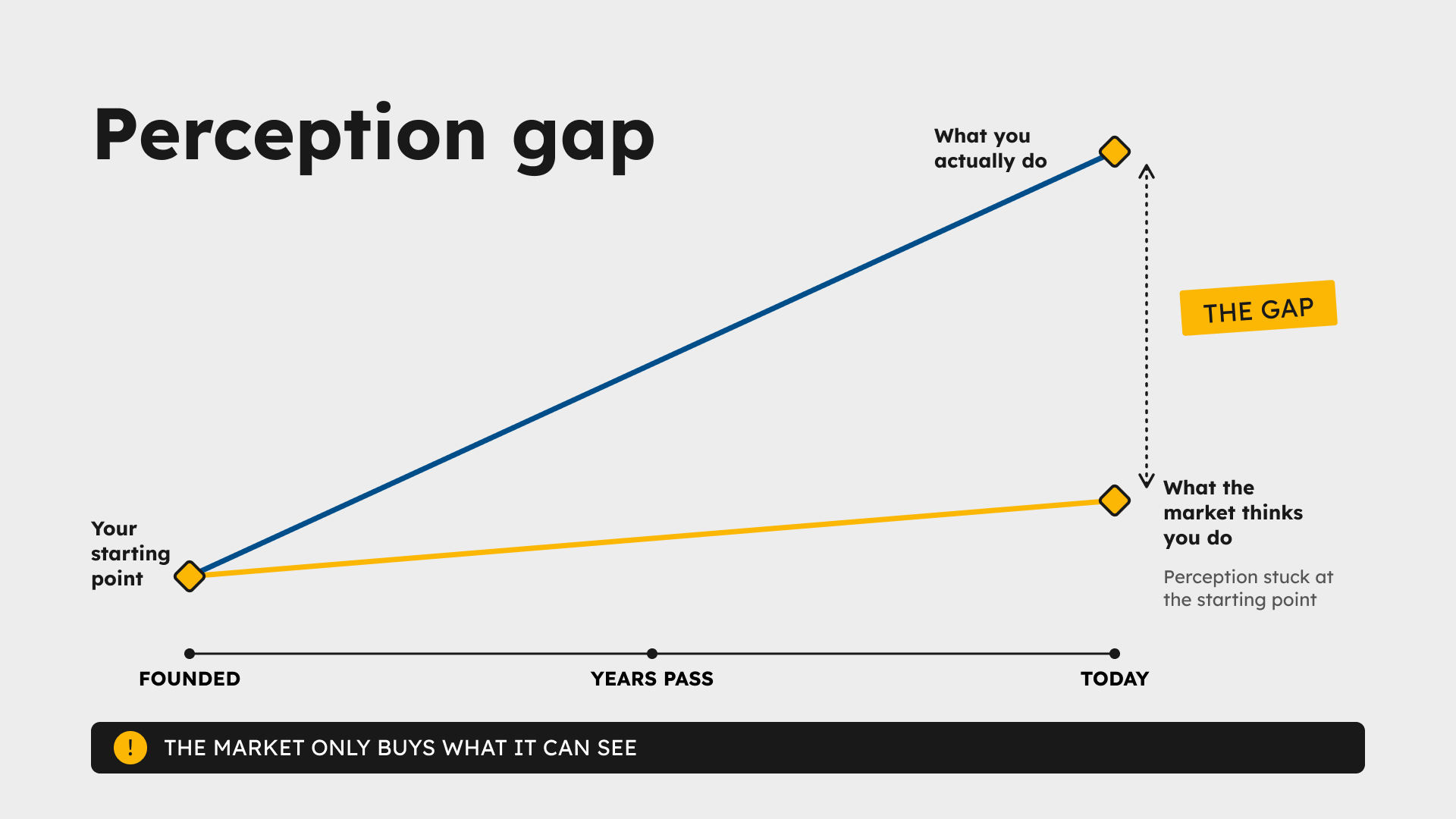
There's a specific problem that hits companies after they've been successful at something for a long time: the market associates you with that. That's what happened to Pingle. For many years, they were known as a porting company. Ports like The Finals, Life is Strange and Five Nights at Freddy's built Pingle's reputation. But what started as game porting projects would often grow into end-to-end game expansion partnerships.
Pingle built out a full art department, took ownership of DLC, sequels, and remasters. They were running entire expansion roadmaps. The business had evolved. The positioning hadn't. The buyers with budgets for that level of work simply weren't seeing Pingle that way. To them, Pingle was the team you hired to execute difficult ports.
When we started working on Pingle’s positioning, we asked a simple question: Does your positioning describe what the company is today and what it wants to be in a few years? The answer to this question became the basis of the new positioning. We didn't invent a new story, but discovered what was already true about the business.
Pingle is a team that takes responsibility for the development roadmap, scope, deadlines, and results. That puts them in a different category from traditional co-development (the model most commonly used in game development).
During our research, we found an interesting pattern: publishers usually describe their needs in terms of technical capabilities. They’re looking for a partner for porting, content development, or project support. But that’s not the real problem they’re trying to solve:
They already have a successful game. They need a partner who can help scale that success.
Scaling can mean many things: launching on new platforms, creating DLC, developing sequels or remasters. But the ultimate goal is to build on what has already proven its value in the market. It was this insight that became the foundation of the new positioning.
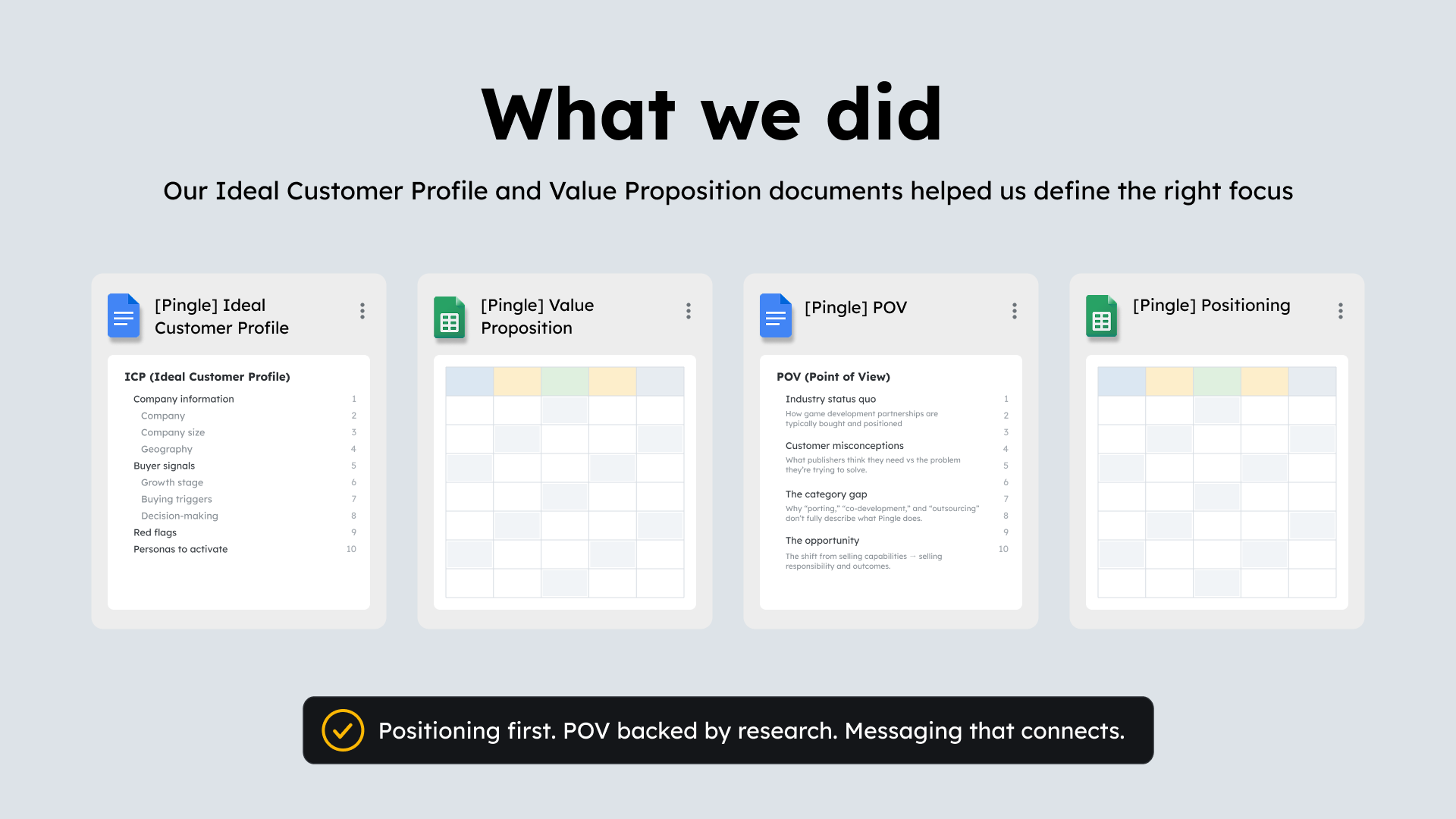
We interviewed Pingle’s founders and delivery team, analyzed its customer base, and defined the ideal customer profile: AAA and AA publishers and large studios with a successful product looking for a partner to own its next stage of development. From there, we refined the value proposition and built a new positioning around what Pingle could take responsibility for.
Our positioning work defined what Pingle needed to communicate to the market. The next challenge was making that message consistent across the website, case studies, blog, and external communications.
The case study work was its own challenge. Pingle's team thinks in engines and render pipelines. These are valuable details for technical experts, but not necessarily for the non-technical decision-makers in their ICP. We ran interviews to uncover the decisions and tradeoffs, then translated them into stories that both technical and non-technical audiences could understand.
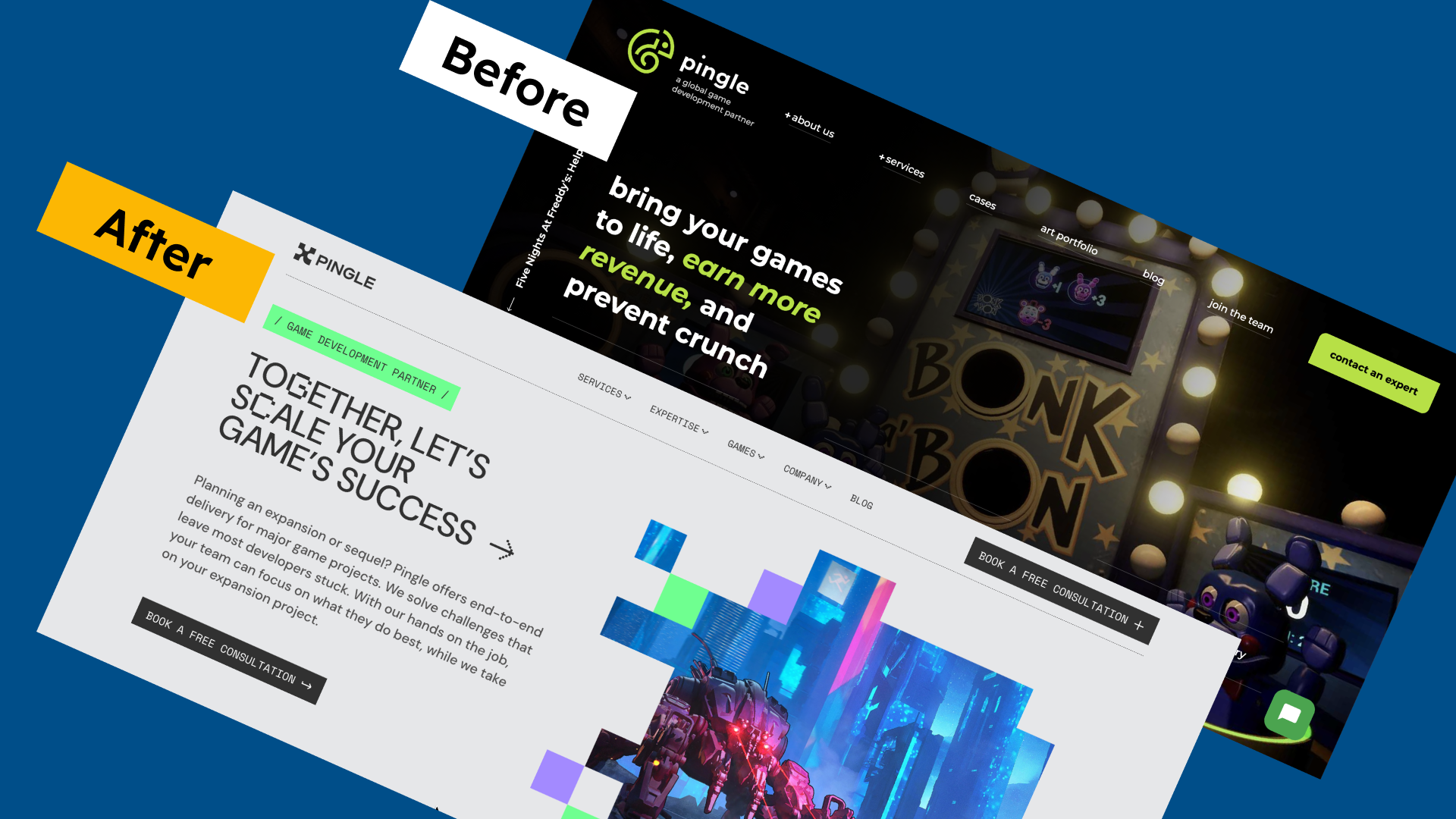
Now, every element of Pingle’s communication reinforces one core message: We scale the success of your game. The story shifted from capabilities to outcomes: more platforms, more revenue, more players. The homepage answers the question every publisher is asking in the first few seconds: Can this team operate at my scale?
Every page reinforces the same idea: This is not a contractor to be managed. This is a partner who takes responsibility.
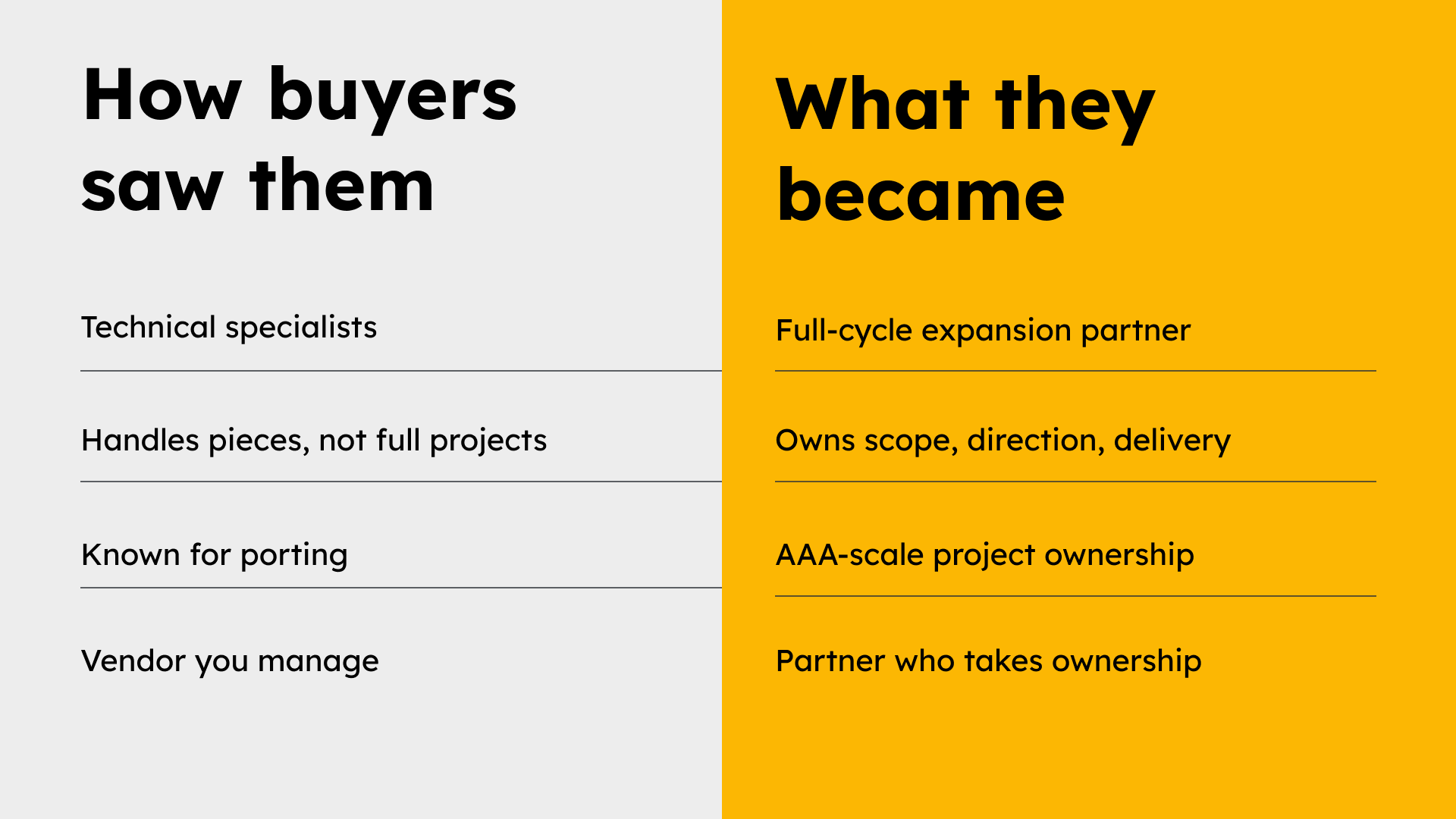
The market was buying Pingle for what they used to do, not what they were capable of doing. Our positioning work closed that gap. We keep working with Pingle. Positioning was the foundation and now we’re building the visibility and brand authority to make it stick.
Your market can’t see what you don’t communicate. A company’s capabilities can evolve faster than its reputation. Positioning has to catch up, or you’ll keep being evaluated for the work you used to do.
You can team up with us to define your positioning, build a content strategy and operations, or create copy and content. We want your audience to not just notice you but to actively seek you out, waiting to hear what you have to say next.




