
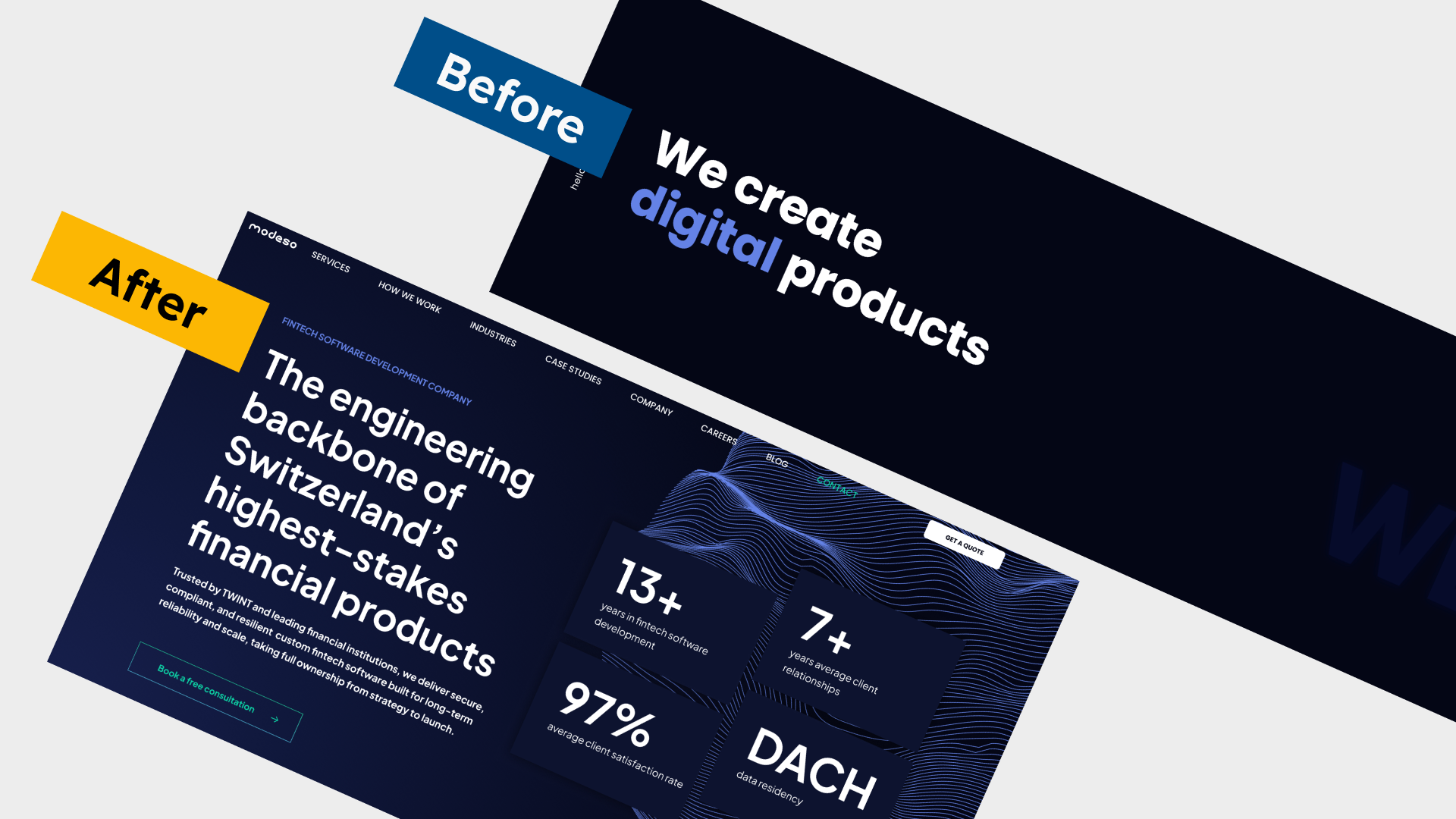

Modeso had everything a Swiss enterprise client could want. Swiss founders. Swiss leadership on the ground. Delivery built for regulated industries. A portfolio that included leading brands such as TWINT, Würth, and Visana.
But having the right credentials and being known for them are two different things.
When we first spoke with Modeso, they were generating leads. The pipeline wasn't empty. But it was entirely dependent on the founder's network and personal relationships. There was no inbound engine that they could predictably scale.
That's what they came to us to build.
A company that knew its market but hadn't claimed its place in it
Modeso positioned itself broadly as a "software development company."
Every agency in Europe says the same thing, so it's really hard to choose between them.
Modeso had earned enterprise trust, but their content and messaging didn't reflect that. They had a few service pages on the website and a few blog posts. But nothing that signaled authority to the kind of enterprise buyer they were targeting.
Swiss enterprise buyers don't simply run a Google search and fill out a contact form. They validate. In a market where trust matters more than price and regulatory risk shapes every procurement decision, credibility has to be visible. That means you need to rank in Google, be cited in AI tools, and be consistent in how you talk about what you do across channels.
The content system Modeso needed didn't exist yet. So we built it.
What the market told us before we wrote a single word
We didn't hand Modeso a spreadsheet of 32 fintech keywords to blog about.
We started with a discovery phase built around the Swiss market itself: how it buys, what it values, and which signals enterprise decision-makers use to vet vendors.
A few things became clear.
Switzerland runs on services, and the core engine is finance. That shapes the procurement culture with its long buying cycles, high trust thresholds, and risk-averse decision-making.
Swiss enterprises aren't looking for the cheapest option, because avoiding risk is more important. They go with the option least likely to fail them.
Fintech is one of the most competitive and demanding software markets in the country. The most prominent niches include digital banking, compliance automation, payments infrastructure, and insurtech. That's a high stakes market, with buyers who prefer working with local partners who understand regulated environments and can handle their data securely within Switzerland's borders.
Enterprise buyers in Switzerland don't "buy off Google." They validate vendors through trust signals and proof of expertise. Generic SEO content isn't exactly what you need to help them make a choice.
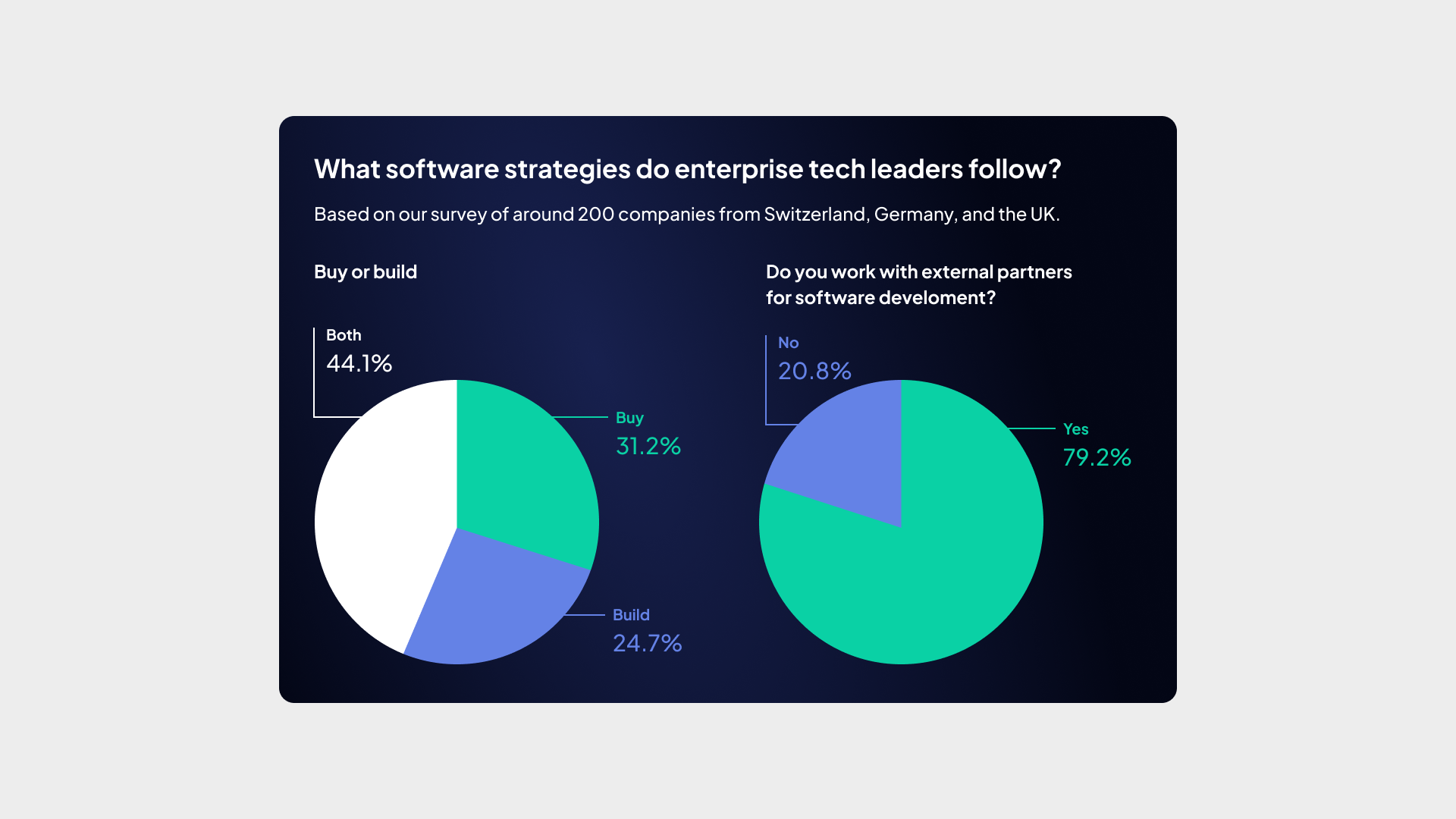
To go beyond our own analysis, Modeso commissioned original research: a survey of nearly 200 enterprise leaders across Switzerland, exploring how they approach software development decisions, whether they outsource or build in-house, whether they prefer local or international partners, and what ultimately drives their choice.
The findings became the strategic foundation for everything we built.
The slow burn, the pause, and why the strategy still worked
We began publishing industry-driven content. These were pieces built around the decision frameworks of enterprise buyers, supported by light SEO.
Content started ranking. MQLs did not immediately appear.
That's normal in enterprise markets. Exactly what you'd expect when buying cycles run six to twelve months.
But it didn't look impressive. So Modeso paused.
They stopped our collaboration. For five months, no new content was created.
And here's what happened: visibility didn't disappear because content built around authority doesn't die when publishing stops.
Five months later, Modeso came back. Inbound leads had started appearing from content written months earlier.
Narrow to win: the decision we made in our strategy
With proof that inbound worked, we made a deliberate choice to simplify.
Trying to be a software partner for every industry in every context meant owning none of them. So we cut down to:
- One core service: full-cycle software development
- One core industry: fintech
- One core ICP: enterprise
We wanted Modeso to be unmistakably clear to human readers and to AI systems: what they do, who they serve, and why they're the right choice for fintech enterprises that need complex software built in a regulated environment.
We created content around that narrowed position. Here is how I would describe it in one sentence: full-cycle development as a strategic capability (not just a delivery model), fintech outsourcing for Swiss and DACH enterprises, survey-based proprietary insights that gave Modeso credibility, and enterprise risk mitigation as a framing device for every major piece.
Topics like The Best Full-Cycle Software Development Companies in Europe That Speak DACH, 7 Challenges of Full-Cycle Development in FinTech, and What to Look For in a Full-Cycle Development Partner weren't chosen for search volume alone. They matched the questions our enterprise buyers would be asking before selecting a partner.
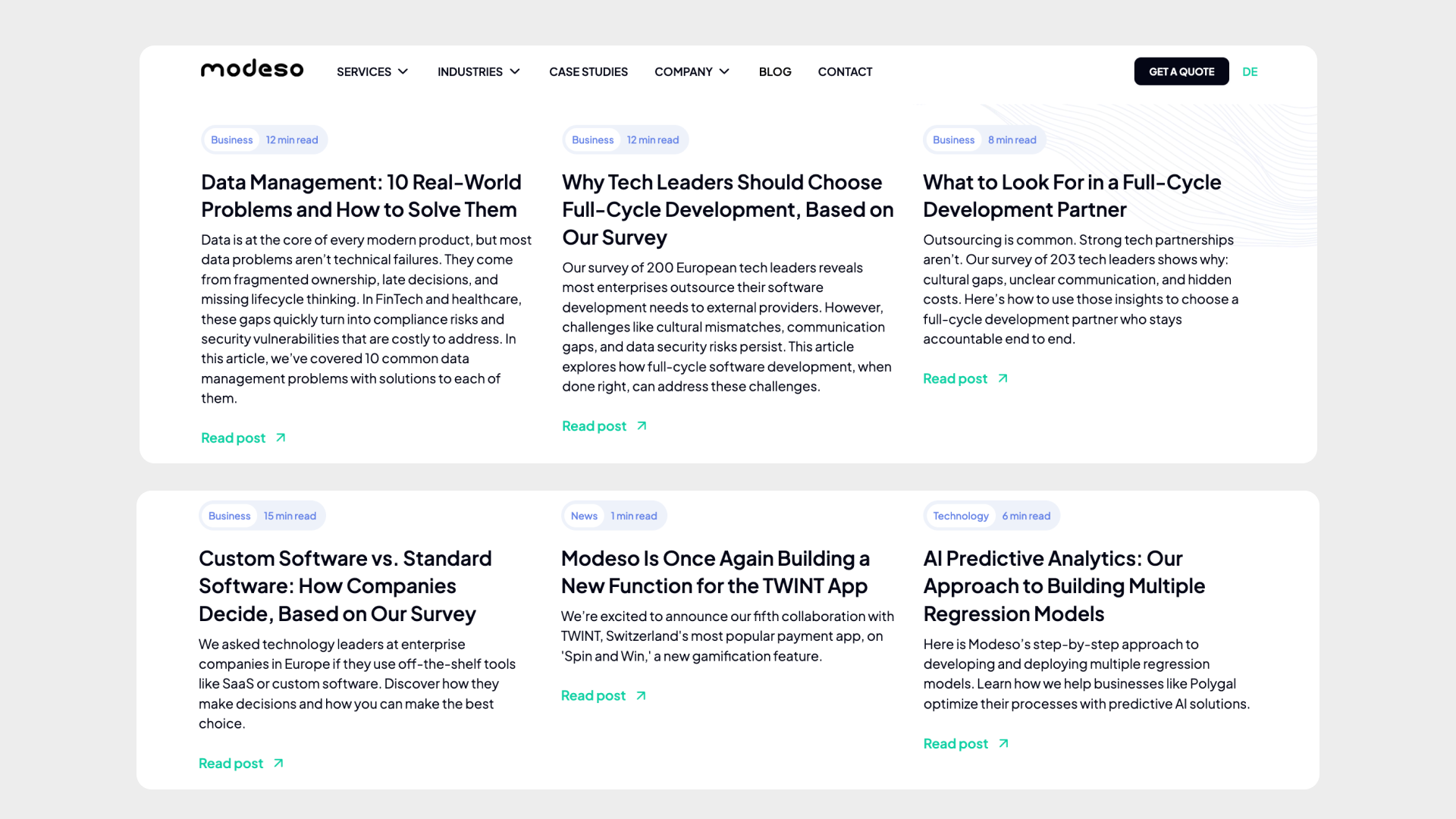
We also strengthened internal linking, built thematic clusters, and applied basic SEO hygiene.
The goal was making Modeso the default reference point when someone searched for full-cycle development in Switzerland.
Why AI visibility became part of the strategy
Something else was happening in parallel that most content strategies still aren't accounting for.
Enterprise buyers increasingly use AI tools (ChatGPT, Perplexity, Claude) as part of their vendor research. They ask questions and validate those recommendations by searching further.
If your company doesn't appear in those answers, you don't exist in the consideration set.
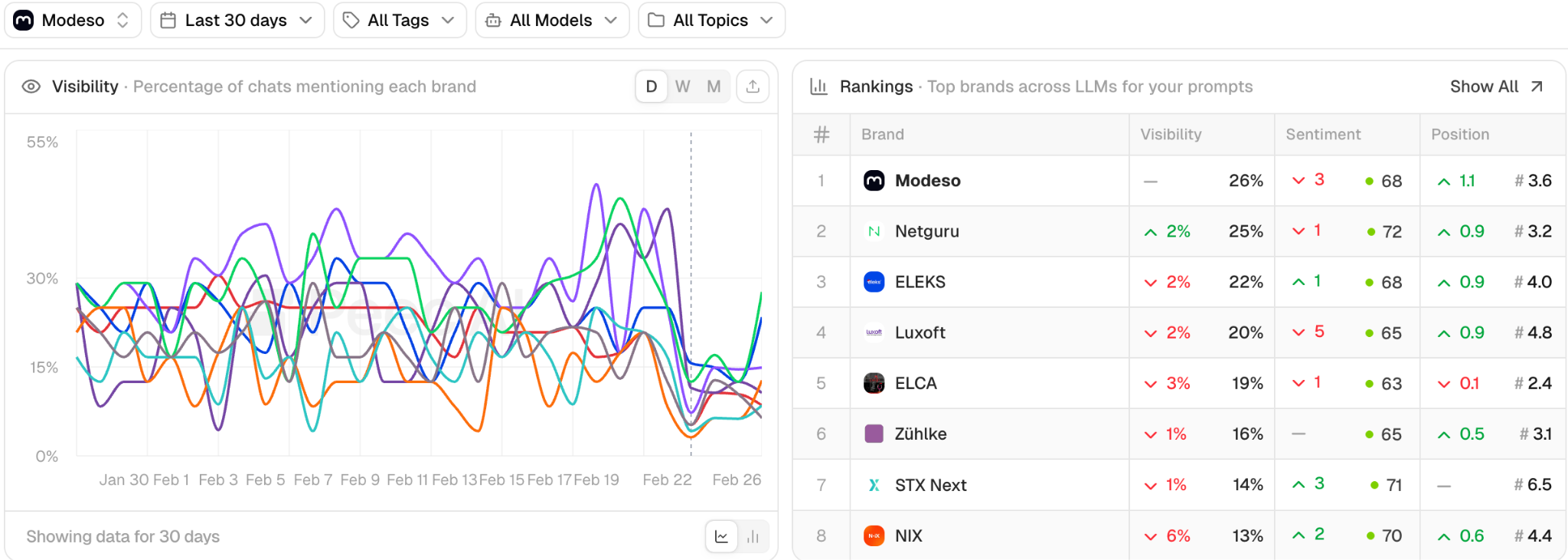
The content we created for Modeso began gaining visibility in AI search. By monitoring performance monthly, we identified what impacts AI citations and optimized our approach. As a result, Modeso now has the highest AI visibility among its competitors.
The result: predictable leads from a market that rewards credibility
It's been about four months since we came back after the pause.
Brand traffic increased by 42%. It represents decision-makers searching for Modeso by name.
Modeso reached a 26% AI visibility score, the highest among their competitors. AI tools began citing them in relevant industry contexts.
Full-cycle keywords that had temporarily dropped during the pause were recovered and stabilized within two months. Modeso now ranks for relevant terms in both Switzerland and the US.
And most importantly: 3-4 qualified enterprise leads per month, consistently, from the Swiss market.
What didn't work was generic SEO, shallow content, and broad positioning that said nothing to anyone. What worked was industry focus, local context, authority content, and an answer to one question: what does this market actually trust?
Read next: How Eleken Generated 20+ Monthly Leads in the First 3 Months of Content Marketing


