


The beginning of the year is my favorite time to do this. As a strategist, every January I explore trend reports, last year conclusions and new year predictions (it's also fun to see how those worked out the following year).
Most trend reports falls into one of two buckets:
1. Obvious things everyone already knows.
2. Shiny tactics that won’t survive the next quarter.
This piece is neither.
What you’ll find here are changes happening in the market. I broke each trend down into three parts:
- How it used to work
- What changed
- How to apply it to your brand, product, or content
The trends I've included are the logic shaping B2B marketing in 2026.
Let’s get into it.
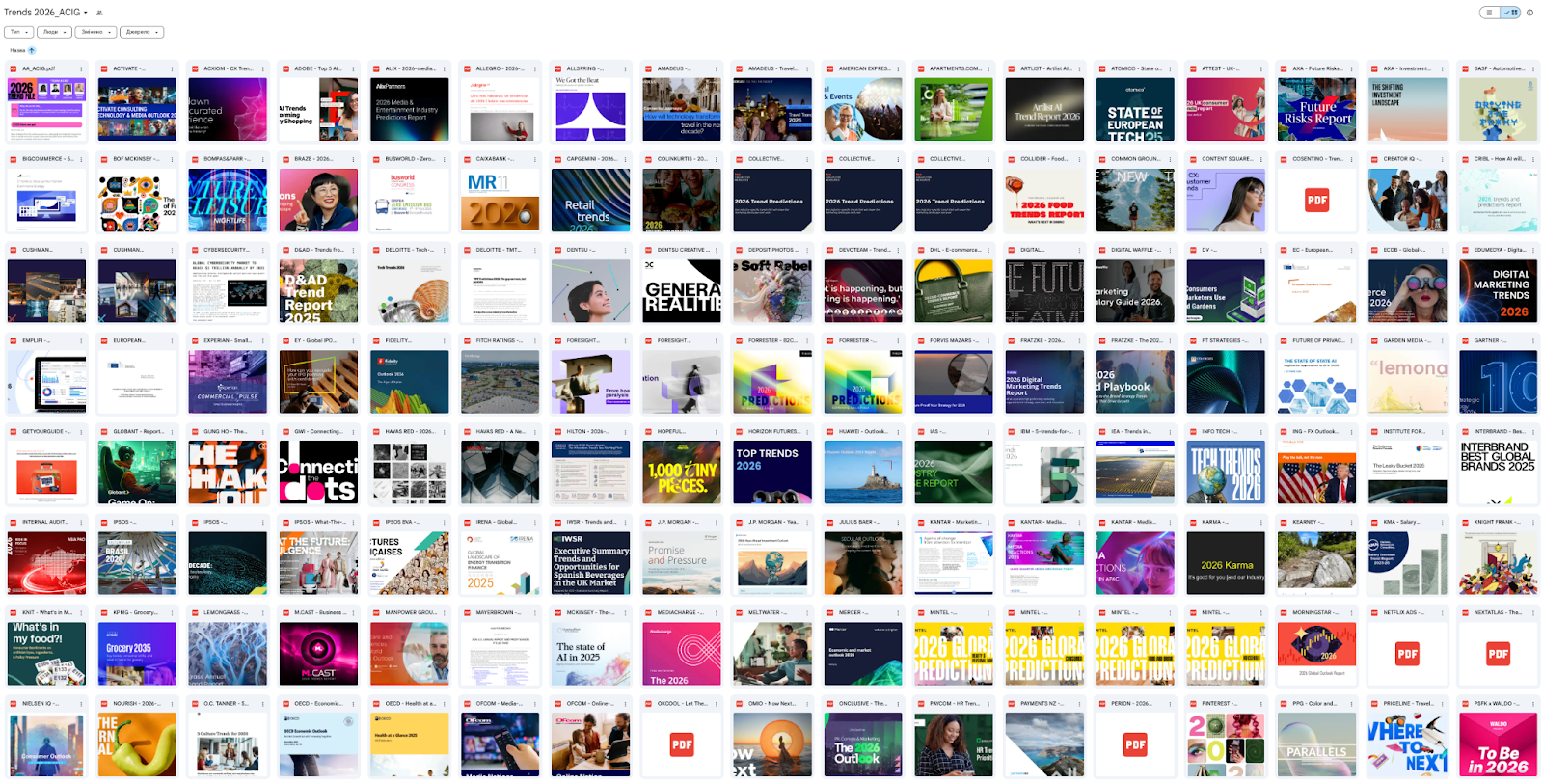
*This analysis pulls from repeated signals across reports by AXA, Info-Tech, Forrester, FT Strategies, Activate, Fratzke, Emplifi, and more.
TL;DR
- Buyers don’t care where you’ll take them in 3 years. They care what won’t break next week.
- Content that stays in one place dies there. Your best ideas need to show up in social feeds, AI answers, newsletters, and videos.
- Omnichannel is no longer seen as “be everywhere.” It’s “be coherent everywhere.” If your story changes between your website, LinkedIn, and sales deck, you look unsafe.
- Stop marketing “AI-powered.” Show what disappears from the workflow after adoption.
- Human tone isn't enough for trust building.
- In 2026, the buyer doesn’t always land on your page. But AI does. You can’t optimize for LLMs if you don’t track where and how they surface your content.
- The most “creative” brand rarely wins. The easiest-to-explain brand does.
- 2026 rewards AI content systems, not random prompts.
Scroll for the examples. You’ll see exactly how these trends show up.
TREND 8: From the big vision to plain simple risk control
Before
For most of the last decade, trust was built through vision. If your brand sounded like it had a map of the future, buyers assumed you were competent enough to lead them there.
So everyone sold the same story:
- Enterprise platforms pushed multi-year roadmaps and sold “transformation”
- Consultancies sold “future readiness”
- Cloud vendors sold “foundations for innovation”
And in a relatively stable world, this worked. Because risk felt distant and waiting felt acceptable.
I guess you could sell the big future because, at the end of the day, today felt manageable.
What changed
Risk moved closer. So close that teams started feeling it in real time. They’re losing sleep over:
- Geopolitical instability disrupting supply chains
- AI hallucinations and automation errors playing out at scale
- Data leaks, misinformation, compliance failures
- Tools that promise “efficiency” but still fail at crucial tasks
So vision stopped being enough. Today, trust builds up when decisions feel safer.
Not: “We’ll transform your business”.
More: “Your core workflows won’t break next week”.
How to put this into practice
Shift your messaging from aspiration to risk reduction. Instead of talking about what your product enables, talk about what it prevents:
- What errors does your product block?
- What uncertainty does it remove from day-to-day decisions?
- What becomes more predictable and less fragile?
- Where do you reduce the chance of a costly “we didn’t see it coming”?
Make your product feel like a stabilizer (it absorbs chaos rather than adding complexity).
Example: how this already plays out
The strongest brands are quietly repositioning as:
- Software vendors are risk-management partners
- Tools for speeding up operations and improving efficiency are decision-support systems
- AI-powered apps are predictability engines in an increasingly unstable environment
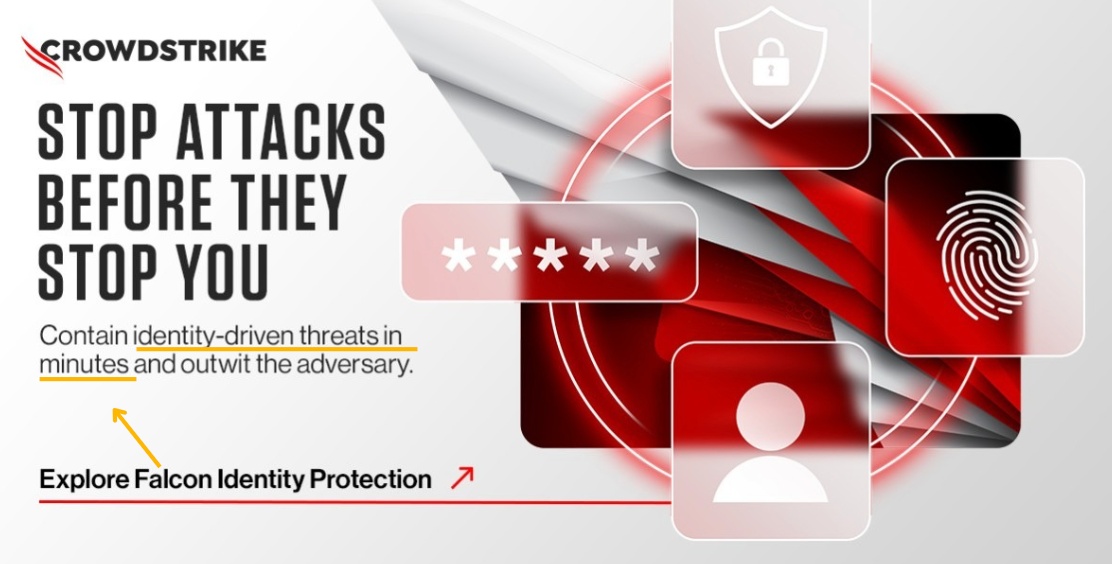
Take CrowdStrike. They don’t lead with a vague “security vision.” They sell speed-to-response: detect threats fast, contain them faster, reduce blast radius.
The promise is this:
When something goes wrong (because it will), the system reacts faster than humans can. And that gap is what keeps a bad day from turning into a headline.
“But what if we’re selling a service, not a product?”
Same trend. Buyers hire service partners because they don’t want their project to go off the rails. They aren't looking for "Move. Innovate. Succeed" or other airy promises.
Take as an example our client.
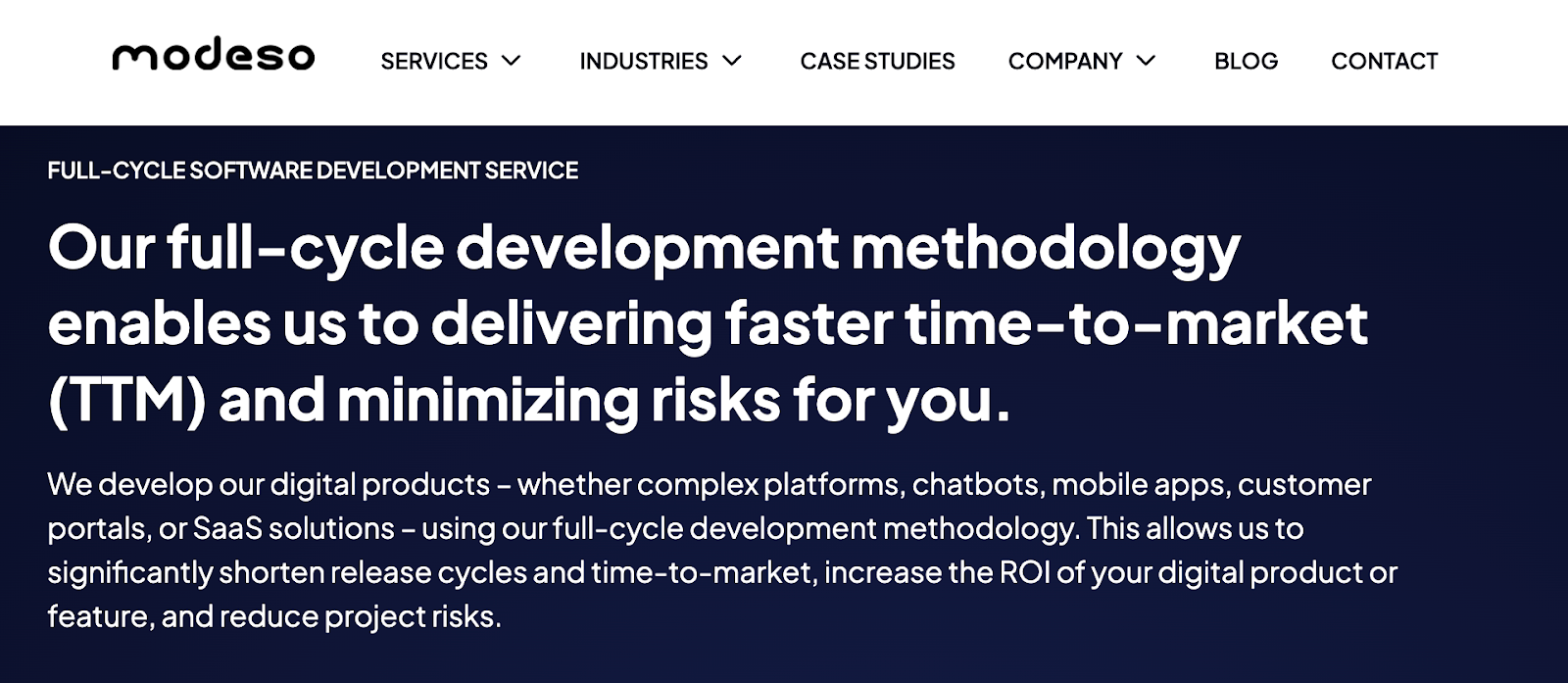
Modeso positions itself as a safe delivery partner. Not: “We’ll build your next big thing.” Instead, predictable execution, reduced delivery risk, fewer surprises in scope, timeline, or quality, faster time-to-market because the process is controlled.
They’re selling control. And this is exactly what buyers trust right now.
TREND 7: Content must be everywhere
Before
Content used to live in a few predictable places: your website, your LinkedIn, maybe your clients's inbox. Basta.
If you published something high-quality and optimized it well, visibility usually followed.
Discovery was linear: publish → rank → get read.
Distribution was something you did after the work was done. If did it at all.
What changed
People don’t “sit down and read” the way they used to. They absorb ideas while scrolling a feed, half-watching a video, skimming a Slack thread, listening to a podcast on 1.5x, asking ChatGPT for a summary.
Content that waits politely to be discovered gets skipped. As painful as it is, ideas that only exist in one format die in one format.
Today, your content needs more distribution. If it doesn’t show up across feeds, conversations, tools, and channels, it doesn’t exist. No matter how good it is.
How to put this into practice
- Start with one idea. The same core insight should show up in social feeds, sales conversations, AI answers, newsletters, internal decks, and long-form content.
- Build a distribution system you can repeat because distribution never works if it’s treated like a one-off effort.
- Choose fewer ideas and put more effort into promoting them. Be consistent.
Example: how this already plays out
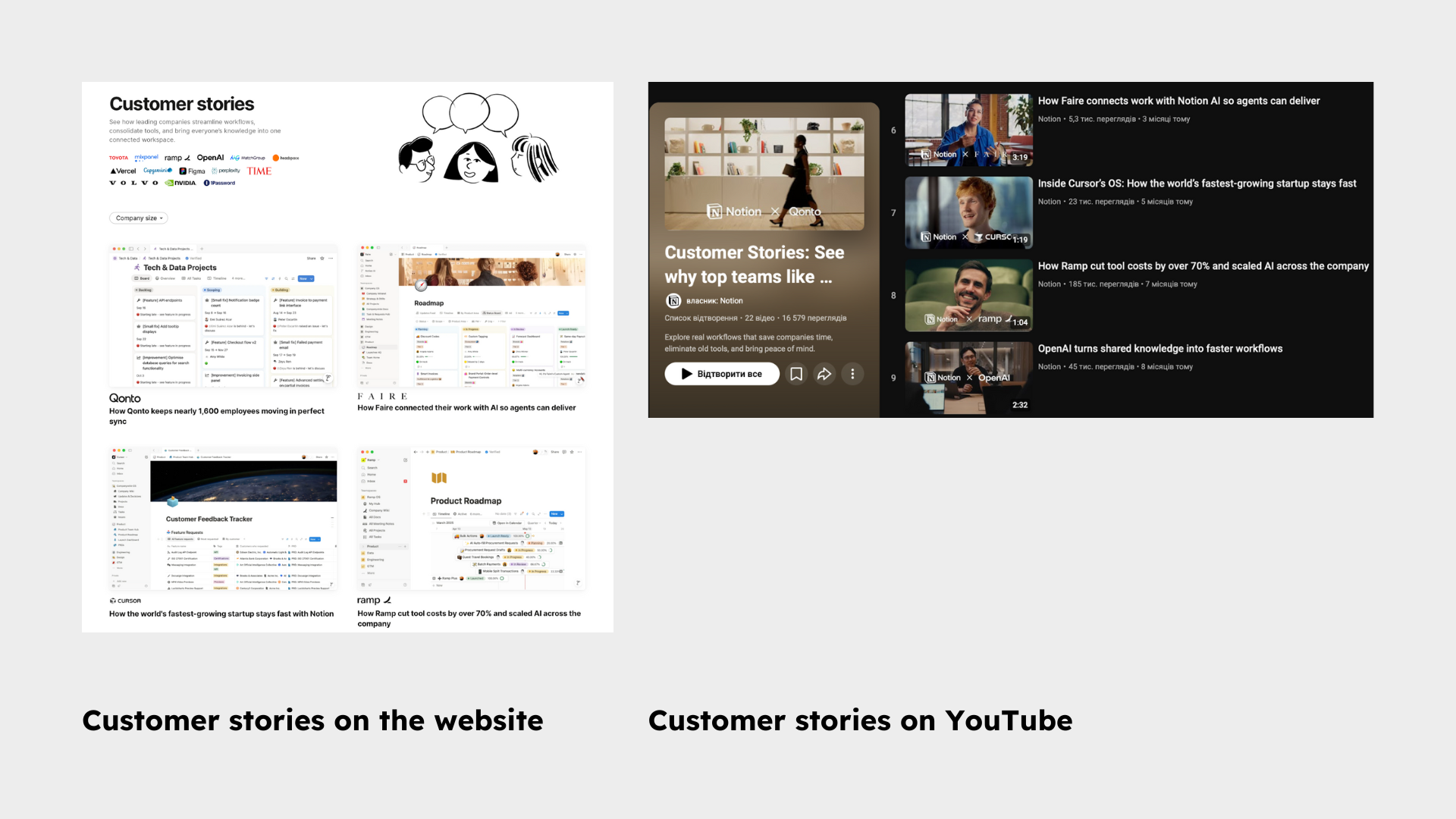
Notion does this well with “proof content.” They don’t treat customer stories as one thing living in one place. They reuse them across channels.
Their Customer Stories on the website and Customer Stories playlist on YouTube are essentially the same narrative repackaged into different formats.
This is how we need to approach content. One idea repeated until it sticks across as many touchpoints as it is possible.
TREND 6: Omnichannel is one POV everywhere
Before
Omnichannel used to mean “multi-channel presence.” If a company had a blog, posted on LinkedIn, ran email campaigns, had a sales deck, etc. that counted as omnichannel. Even if every channel told a different story.
You could have one message on the website and another one in your pitch decks. You could post stuff on LinkedIn using different tones of voice. Hell, you could run ads pushing different promises. And nobody saw this as a problem. Because buyers mostly entered through one channel, evaluated there, and moved on.
Consistency was optional.
What changed
It’s not so hard to repackage your content into different formats and show up everywhere. AI tools help teams publish more.
The hard part is showing up everywhere without becoming incoherent.
When your message differs across touchpoints, that's when trust starts to break. Inconsistency tells the buyers: "Something doesn't add up." They see you as a risk:
- Your teams aren’t aligned
- You're not confident in what you stand for
- Your product might be just as inconsistent
Omnichannel now means one thing: sound like the same company everywhere.
How to put this into practice
- Define a single positioning angle.
- Lock one core point of view.
- Website, LinkedIn, sales decks, newsletters are all different formats to spread the same idea.
Example: how this already plays out
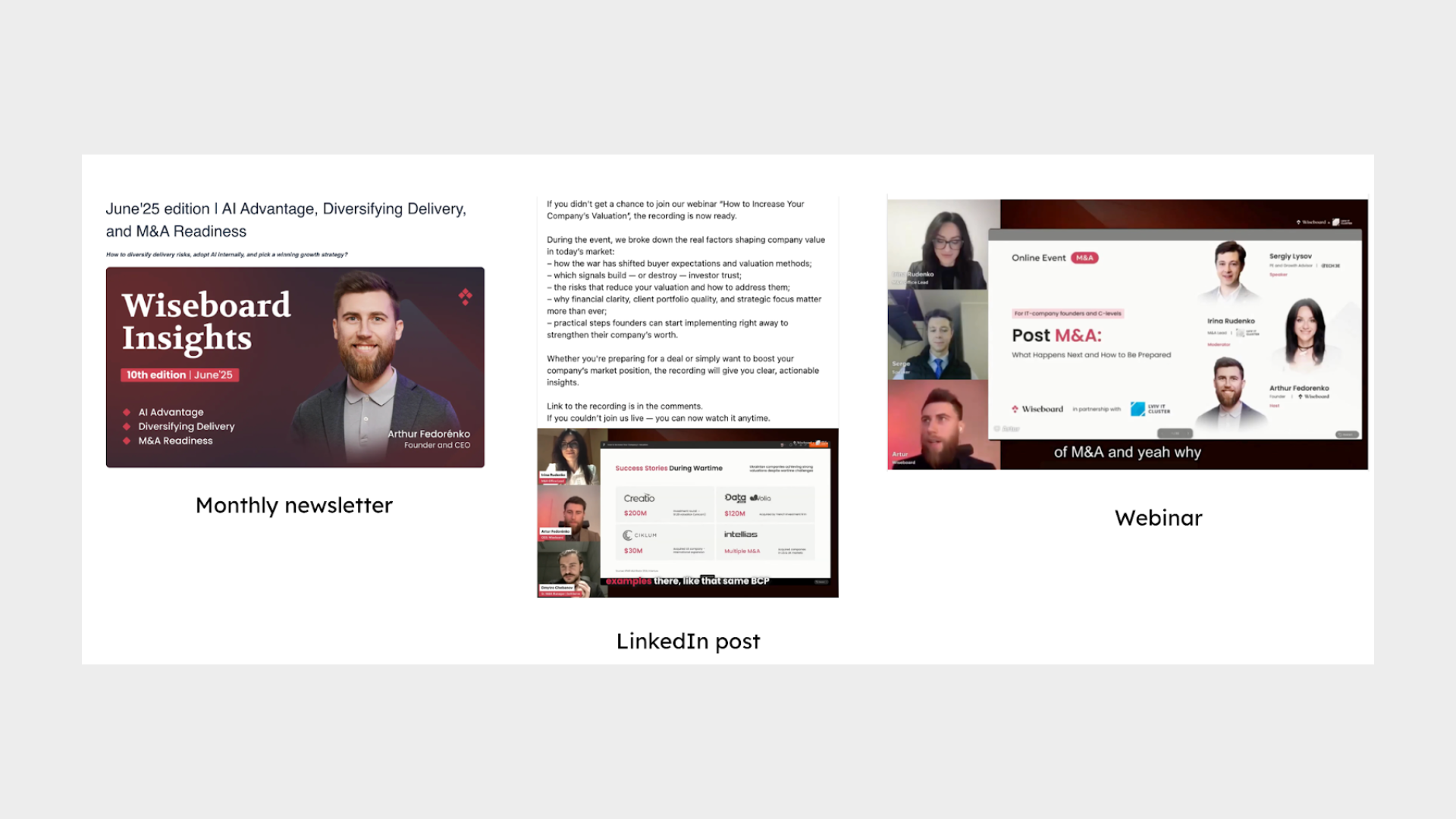
One of our clients, Wiseboard, does this great. They spread the same idea across different channels: LinkedIn posts, newsletters, offline talks, blog content, and webinars. Their brand is easy to recognize, and easy to trust, because you know what to expect.
TREND 5: Don’t sell AI as a feature
Before
When AI first started showing up in B2B products, it was a differentiator. Something you slapped on your homepage to look hot. “AI” became the message: "AI-powered," "Smart or intelligent," "Built with AI," "Uses machine learning."
"These guys are ahead of everyone on the market," was the desired impression and it worked. If it sounded advanced, buyers could connect the dots and imagine the value. AI felt new and that novelty carried weight.
What changed
AI stopped being special. Just look around. Most SaaS products already use it, and we don't even pay attention to it. We expect it the same way we expect integrations.
What matters isn't if this uses AI anymore. It's what changes after users turn it on:
- Do decisions happen faster?
- Are there fewer manual steps?
- Is the operational cost now lower?
AI became invisible but the impact is now the selling point.
How to put this into practice
Stop selling AI as a feature, and repeating "AI-powered" all over your homepage. That's not going to "wow" anyone. Instead, sell what work looks like after AI is in place:
- Show which tasks no longer need human input
- How work moves differently after adoption
- Which decisions get passed without human approvals
- Which risks are handled automatically inside workflows
Messaging should focus on what has changed.
Example: how this already plays out
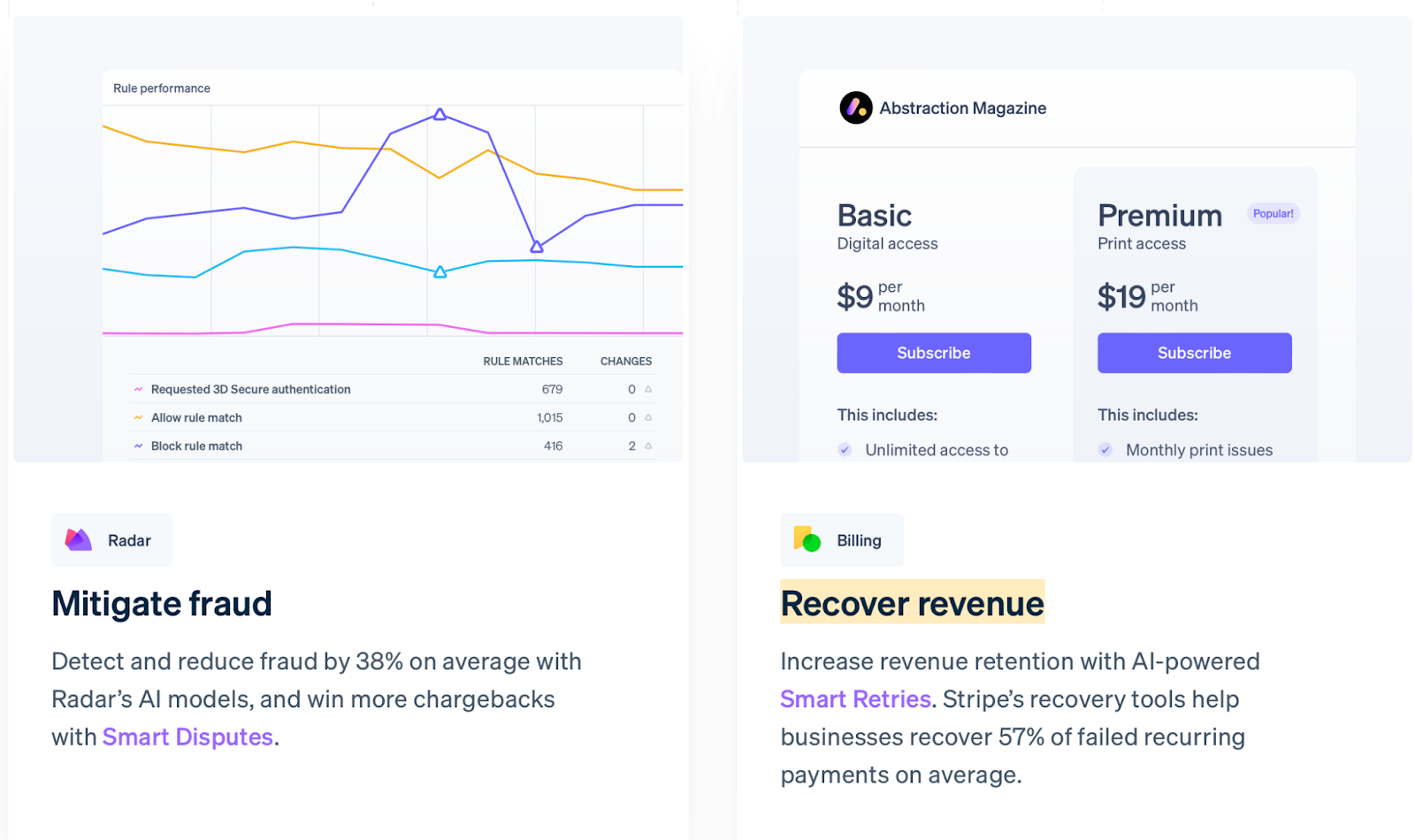
Stripe is a great example of this done right. It uses AI everywhere, but you rarely see them talking about it directly.
Take Smart Retries. Stripe doesn’t hype their "proprietory ML-powered model." They say businesses recover an average of 57% of failed payments (more successful payments, less lost revenue).
As you can notice, the AI part shows up quietly. It's just the engine under the hood that nobody needs to know about. Just like nobody advertises "Our website is powered by PHP." Who cares?
TREND 4: Humanwashing doesn't work. Do you have actual experience?
Before
When AI made content production faster and cheaper, brands responded in the most predictable way possible.
First, they used AI to scale production. Then, they realized everything started sounding the same. So they tried to “fix” it with a human tone of voice. What that meant was asking AI to use a friendly language, vulnerable-sounding hooks, handwritten-style visuals, prompts like "write as if you're talking to friend."
Conversational copy felt refreshing next to stiff formal messaging.
Relatability stood in for credibility, even when there was no "human" experience behind it.
What changed
People got better at spotting fake “human” content. Buyers can tell when:
- Opinions sound like they could belong to anyone
- Stories aren’t tied to decisions or consequences
- Writing feels polished but empty
Now this kind of content backfires.
Conversational language feels engineered. Like someone trying too hard to be relatable. It doesn't sound authentic. And when buyers sense that, they stop trusting the message.
Research from Fratzke points to a pattern: The teams earning attention and trust aren’t the loudest or the most “human.” They’re the most specific. The ones willing to attach names, context, and responsibility to what they say.
How to put this into practice
Stop trying to make AI content sound human. Instead, bring humans back into the system by focusing on content from people doing the actual work. For example, you can let founders explain business models, engineers illustrate technical choices, executives talk about how they make decisions. Prioritize formats like demos, workshops, and offline events.
Example: how this already plays out
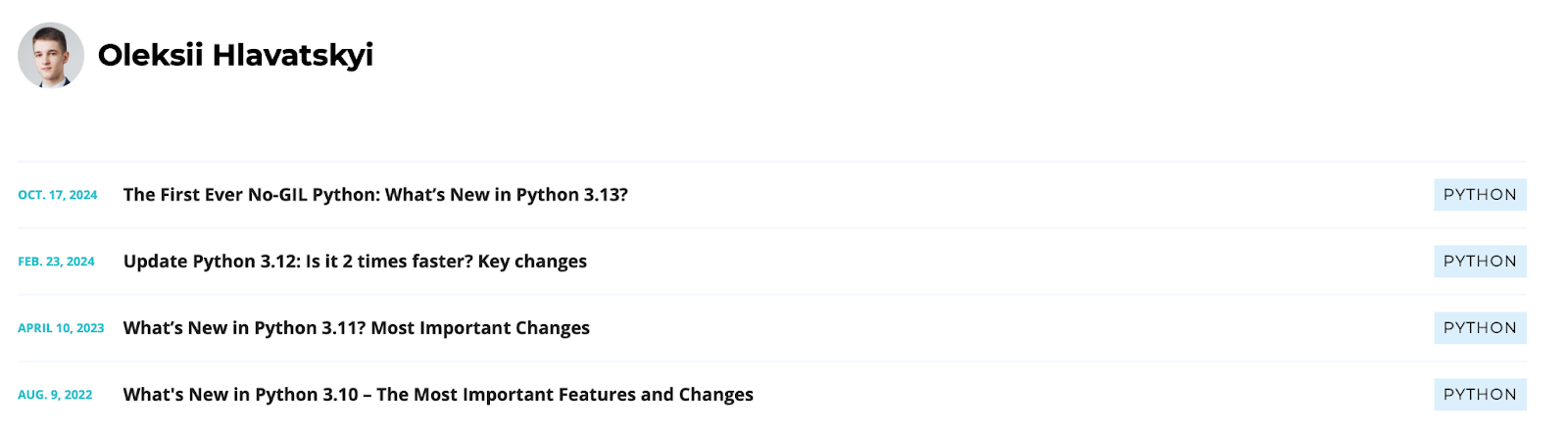
Two of our clients execute this perfectly well. They let people inside the business publish their thinking.
For example, Flyaps gives engineers space to share how they build. This content sounds true because it comes from people doing the work, not people describing the work.
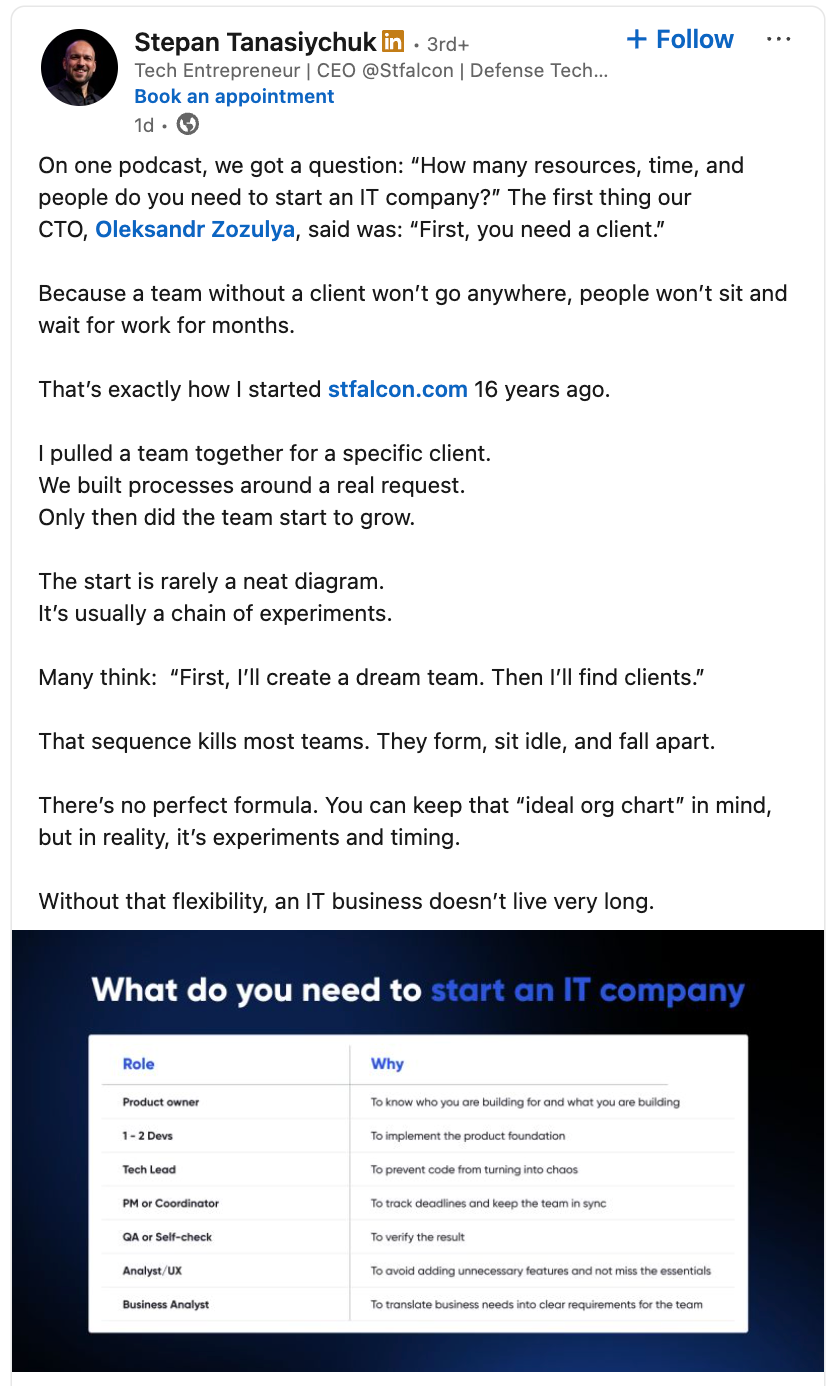
Stfalcon does the same from the leadership side. The founder talks openly about running his business on LinkedIn. What growth decisions and mistakes he made, what lessons he learned the hard way. That's relatable.
TREND 3: Zero-click and AI search break the traffic model
Before
For years, traffic was the scoreboard. You published content which people searched and clicked and landed on your site.
SEO was both the distribution engine and the measurement system. SEO teams tracked rankings and organic sessions to demonstrate success. Visibility and traffic were basically the same thing. If you were seen, you got the click. If you got the click, you got the audience.
What changed
Discovery moved away from websites. Google shows the answer directly in search. People also get answers in social feeds, emails, or AI assistants and… don’t click.
As FT Strategies’ Future of Discovery research shows: visibility still exists but clicks don’t automatically follow.
You can be part of the conversation everywhere and still own nothing.
How to put this into practice
Track visibility beyond clicks by measuring where your content appears in AI answers, third party websites, LinkedIn, newsletters, etc. (not just how much traffic it gets).
Example: how this already plays out
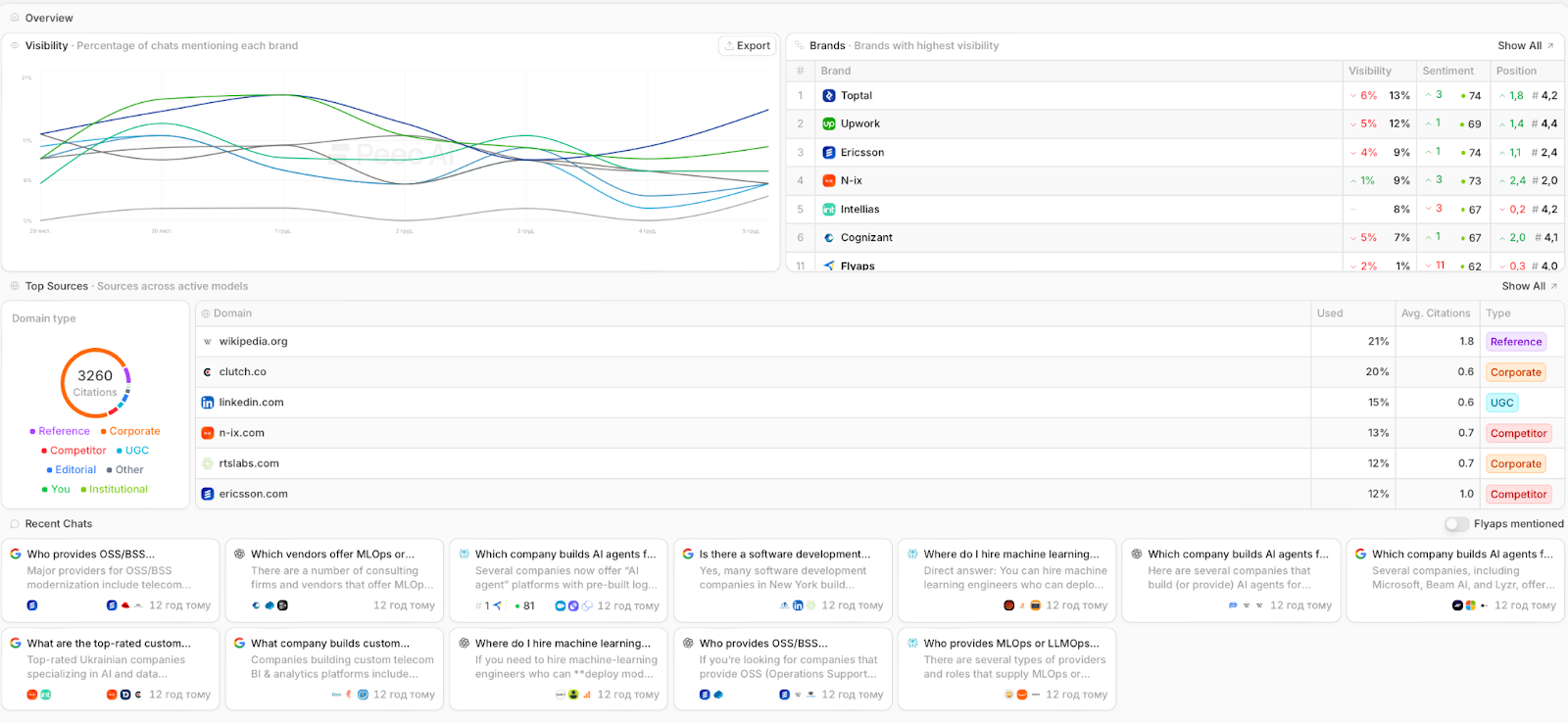
At Zmist & Copy, we track LLM visibility to see which content and where it is being cited by AI tools. That data helps us optimize content to be referenceable inside AI systems.
TREND 2: B2B brands compete on clarity, not creativity
Before
For years, B2B marketing tried to win through expression: better copy, sharper visuals, more clever campaigns, more “stand out.”
Creative positioning was an advantage: if you sounded different, buyers assumed you were better. The goal was memorability because attention was more focused and buyers had time to interpret what you meant.
What changed
In complex markets, the most creative brand rarely wins. The most understandable one does.
Buyers are tired of figuring things out. They’ve had enough of buzzwords, vague promises, messaging that means different things to different people.
Research from Forrester, FT Strategies, and others all points to the same thing: when buying feels risky, clarity is what brands compete on.
How to put this into practice
- Replace clever headlines with clear ones.
- If a buyer can’t explain what you do after reading the hero section, rewrite it.
- Show the screenshots, not abstractions.
- Walk buyers through what actually happens before and after your product is in place.
- Publish comparisons that reduce thinking effort.
Example: how this already plays out
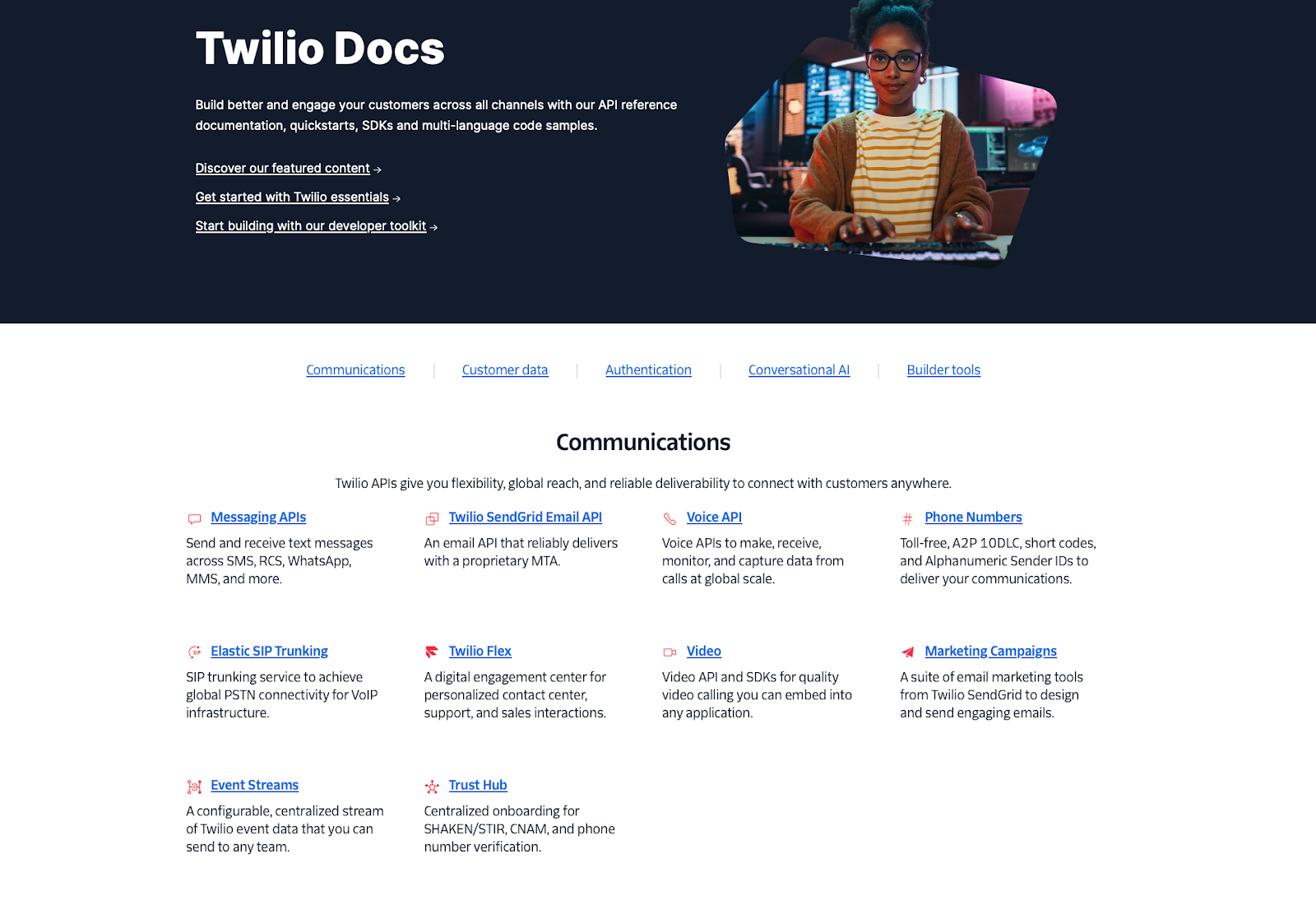
Twilio is a great example. They rebuilt their documentation as a product, making it clearer, treating it as a competitive advantage.
“We’ll make this simple for you.” In today’s market, that promise beats creativity every time.
TREND 1: Not one AI bot – a system
Before
Most companies used one AI tool for everything: research, drafting, editing. And yes, content got faster. But it didn’t get better.
Because one tool produces one way of thinking, scaling content anyone could publish.
What changed
Teams had more drafts, but fewer ideas that actually worked.
If your process is weak, AI scales the weakness.
If your thinking is fuzzy, AI makes it fuzzy faster. This is exactly what we found in our 2026 B2B Content Report: 65% of the 53 B2B content teams we surveyed used AI to simply produce more of what they were already doing, and volume went up while pipeline stayed flat. The 35% who used AI to pressure-test their angle first — before writing a word — got the opposite result: volume flat, authority up.
That’s why many teams moved away from “one AI tool for everything.” Instead, they started building AI systems. Each tool handles a specific job. Together, they work like a team.
How to put this into practice
Use AI as a system. This means:
- Build strategy and POV into the setup, instead of repeating the same thing in every prompt
- Use different AI agents for different jobs, instead of one tool doing everything
- Connect those agents into a single workflow, so context doesn’t get lost
- Keep outputs consistent across formats and channels, as volume increases
When AI works like this, it supports your thinking.
Example: how this already plays out
Instead of prompting AI, we train systems to follow a strategy. Positioning, context, and rules are built into the workflow. Different agents handle different things. That’s when AI supports your content.
Conclusion
None of these trends are about being louder, faster, or more creative. They’re about being safer, clearer, and easier to trust.
If your marketing reduces uncertainty, explains reality, and shows up consistently wherever decisions are made, you’ll win attention without chasing it.


